
If your washing machine is making a loud noise, note when it happens before trying to identify the part. A bang as the drum speeds up points to a different problem from a buzz while water drains. A brief click from the door lock, a steady motor sound during spin and a short gurgle as the last water leaves can all be normal. What matters is a change from the way your washer usually sounds. Pay attention to a sound that becomes louder, persists through ordinary loads or comes with a leak, an error code or poor draining. You usually don’t need to remove a panel to make the first checks. If the sound is violent or you smell burning, stop the cycle rather than waiting for it to finish. Let the drum come to a complete stop and wait for the door or lid to unlock before reaching inside. If the noise is mild enough to observe safely, note whether the machine is filling, washing, draining, or spinning when it starts. Use that timing and the sound itself to work through these five possible causes.
1. An Unbalanced Load or Unstable Setup Is Causing Banging
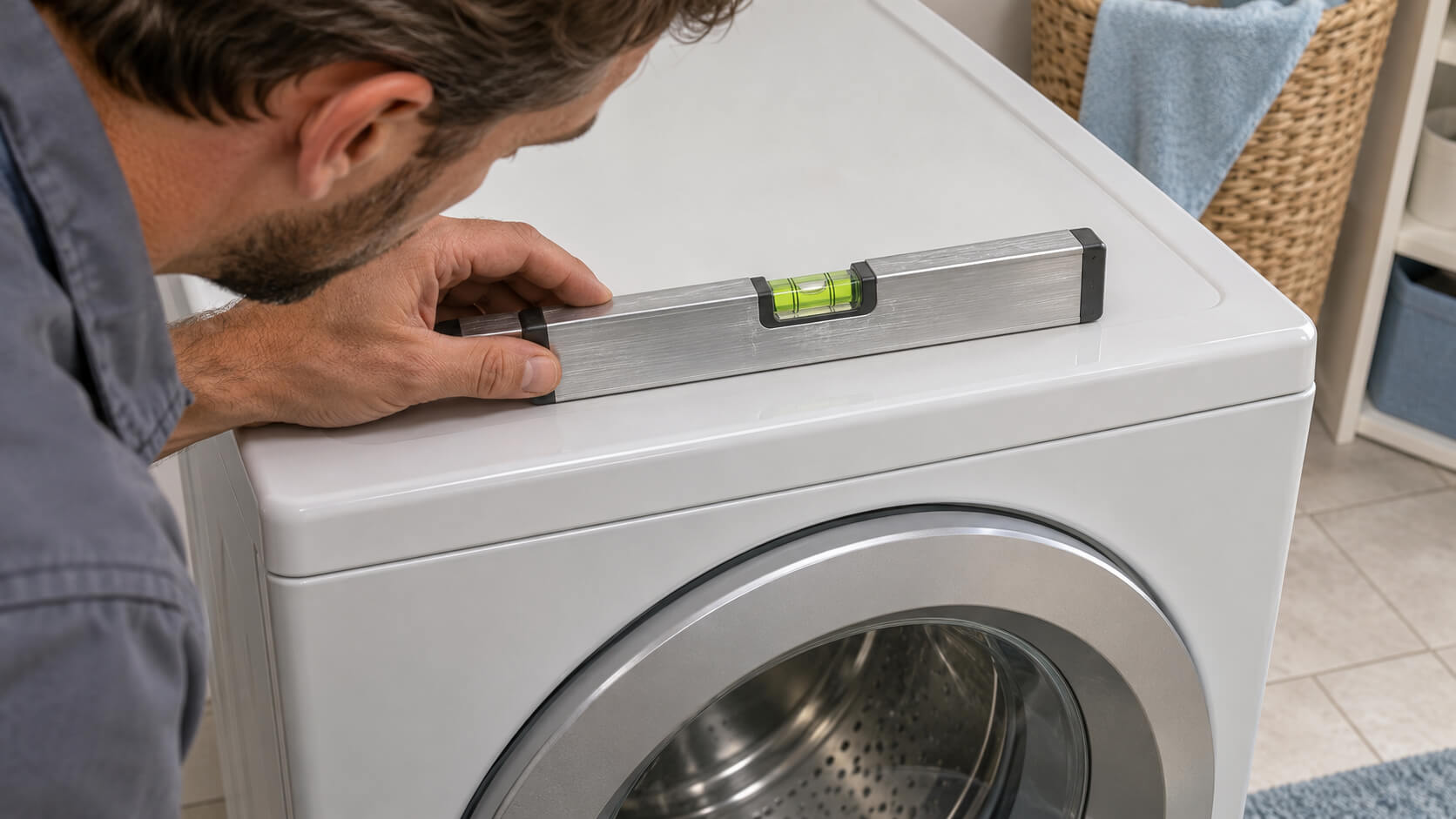
A heavy thump that starts as the washer builds spin speed often points to a load that has gathered on one side of the drum. Wet towels, a single bulky item or smaller garments trapped inside a fitted sheet can all create an uneven load. Overpacking the drum can also keep the load from redistributing. Pause the cycle, wait for the drum to stop and loosen any bundles or remove excess laundry. If the sound only occurs with bedding, check the care labels and use the bulky-item program if the washer offers one. When the washer is off, check whether the cabinet rocks when you press gently on opposite top corners. If it does, check that the leveling feet are set according to the installation guide and that all four feet rest firmly on the floor. If a newly installed or relocated front-load washer bangs on the first spin, verify that the specified transit bolts and packing materials were removed. A loose hose tapping the back panel or a cabinet touching the washer can also make a spin sound louder. If the banging persists with normal, balanced loads and the washer stands firmly, the suspension may need inspection. Don’t try to steady a moving washer with your hands while it spins.
2. Coins, Fasteners or Other Loose Objects Are Rattling
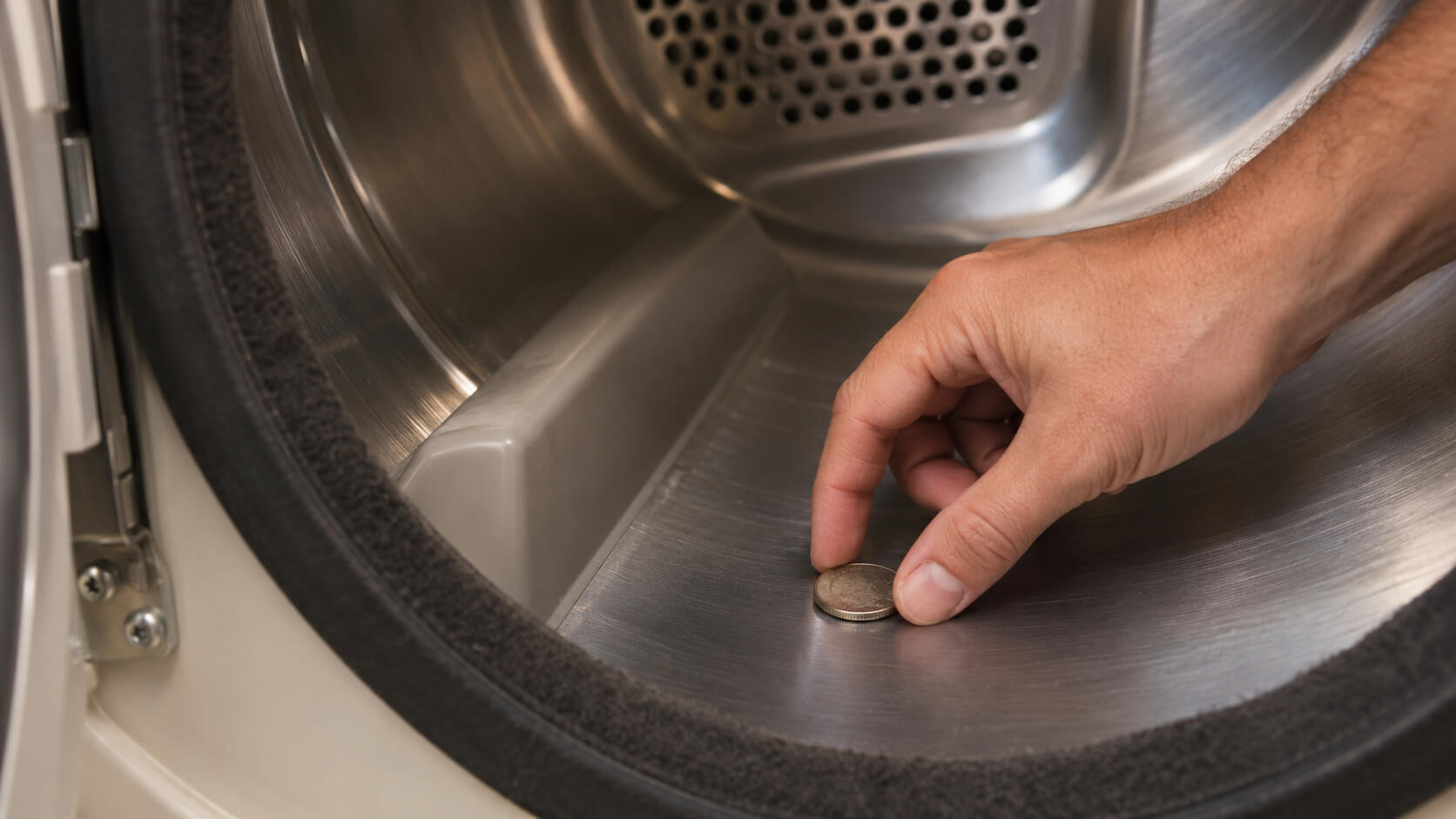
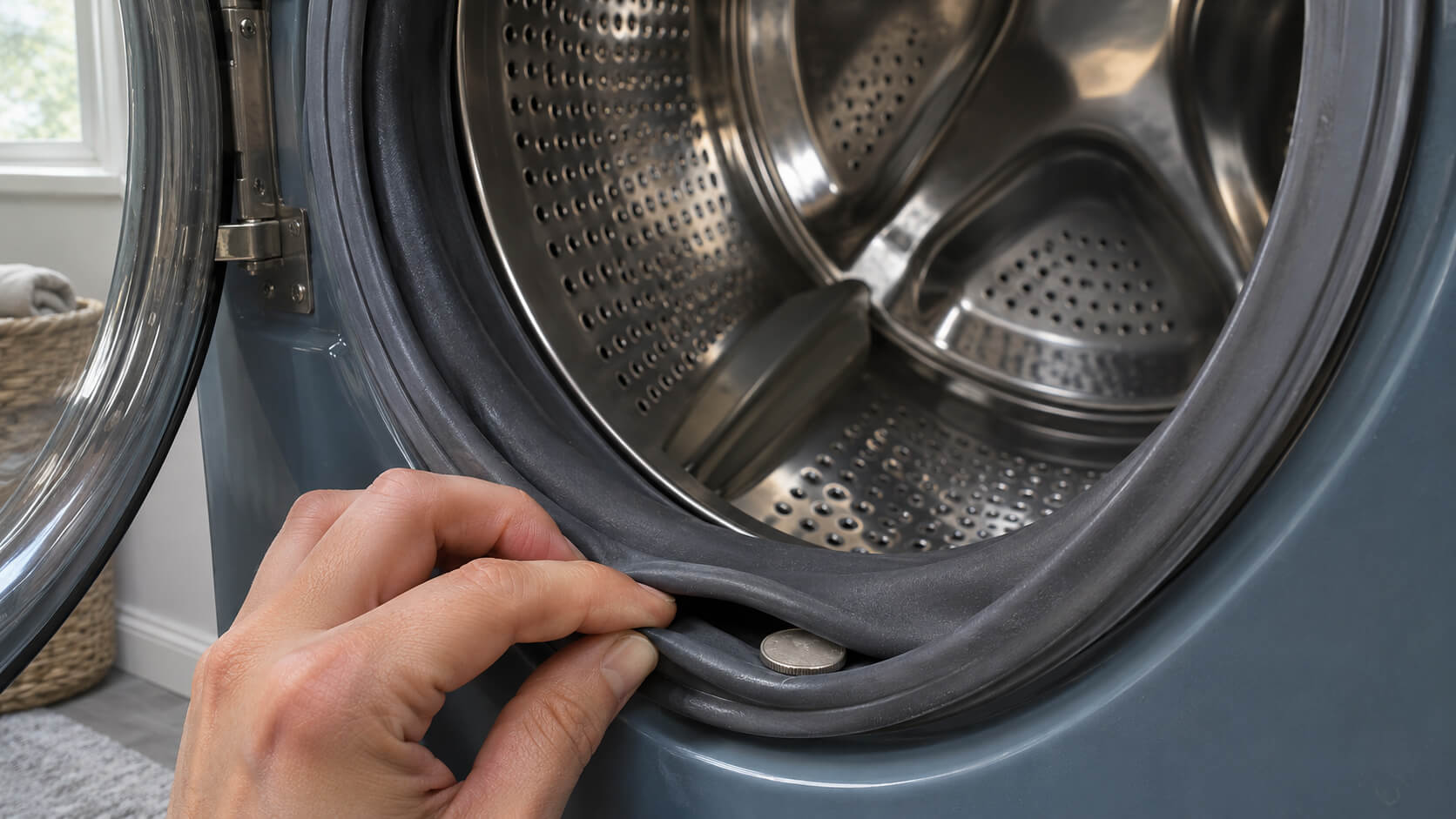
A sharp metallic rattle during tumbling often comes from something in the load rather than a worn motor. Coins, keys and metal buttons can strike the stainless drum or door glass. A belt buckle or zipper can produce a similar tap when the garment changes position. Switch the washer off and inspect the drum and the load once it’s safe to open the door. On a front-load washer, look along the visible folds of the rubber door gasket for loose items. Remove an object only if it’s plainly visible and comes away without force. A thin wire or other object caught between the inner drum and outer tub may make a scraping sound at the same spot on each turn. If an item has slipped past the drum or the scraping continues after you remove the load, don’t pry at the seal or push a tool through a drum hole. Have the source checked before running another cycle, especially if you see new scratches or damage to the seal. Empty pockets and secure loose fasteners before the next wash to prevent the problem from recurring.
3. A Clogged Filter or Drain Pump Is Making Noise as Water Empties
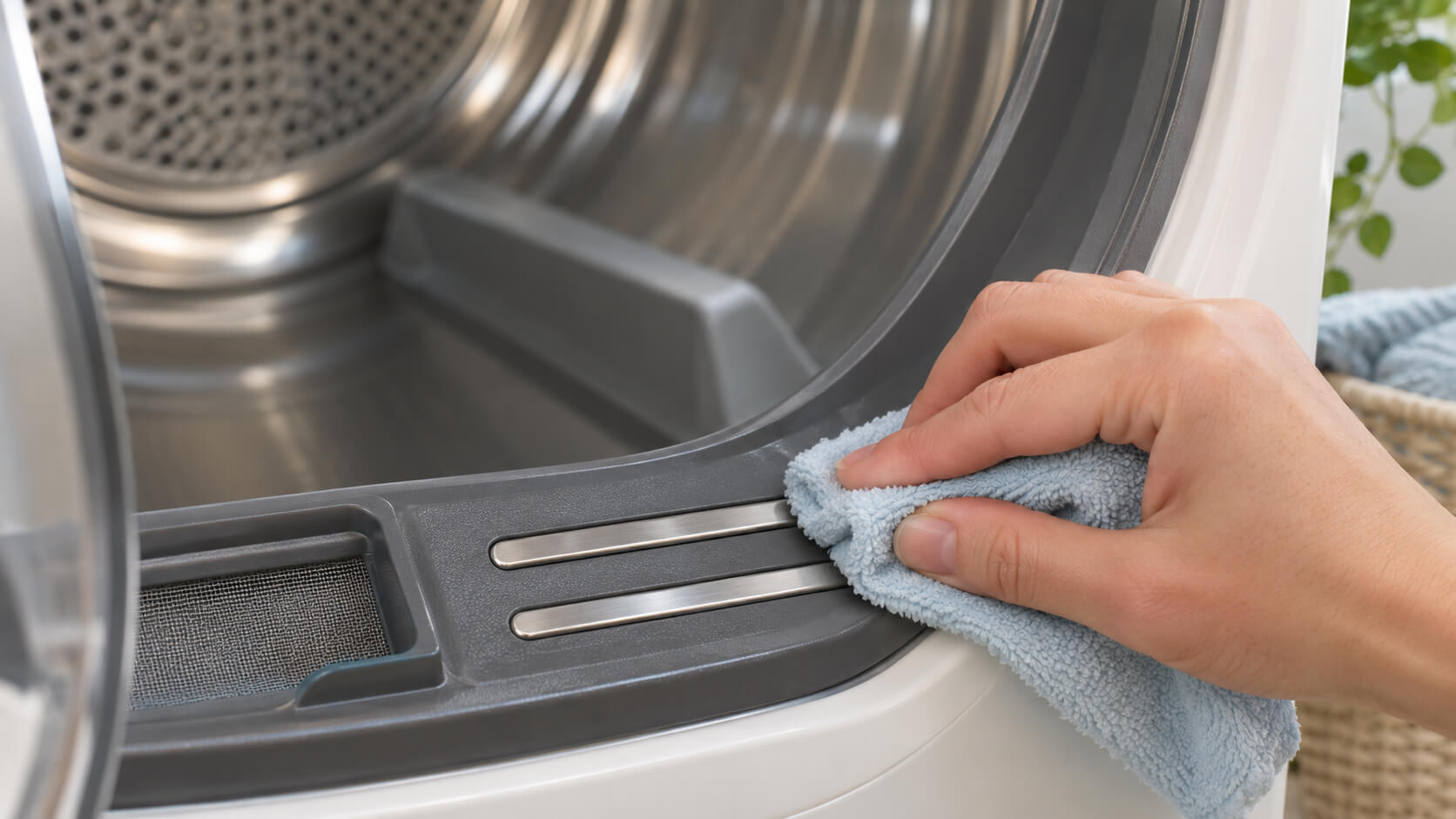
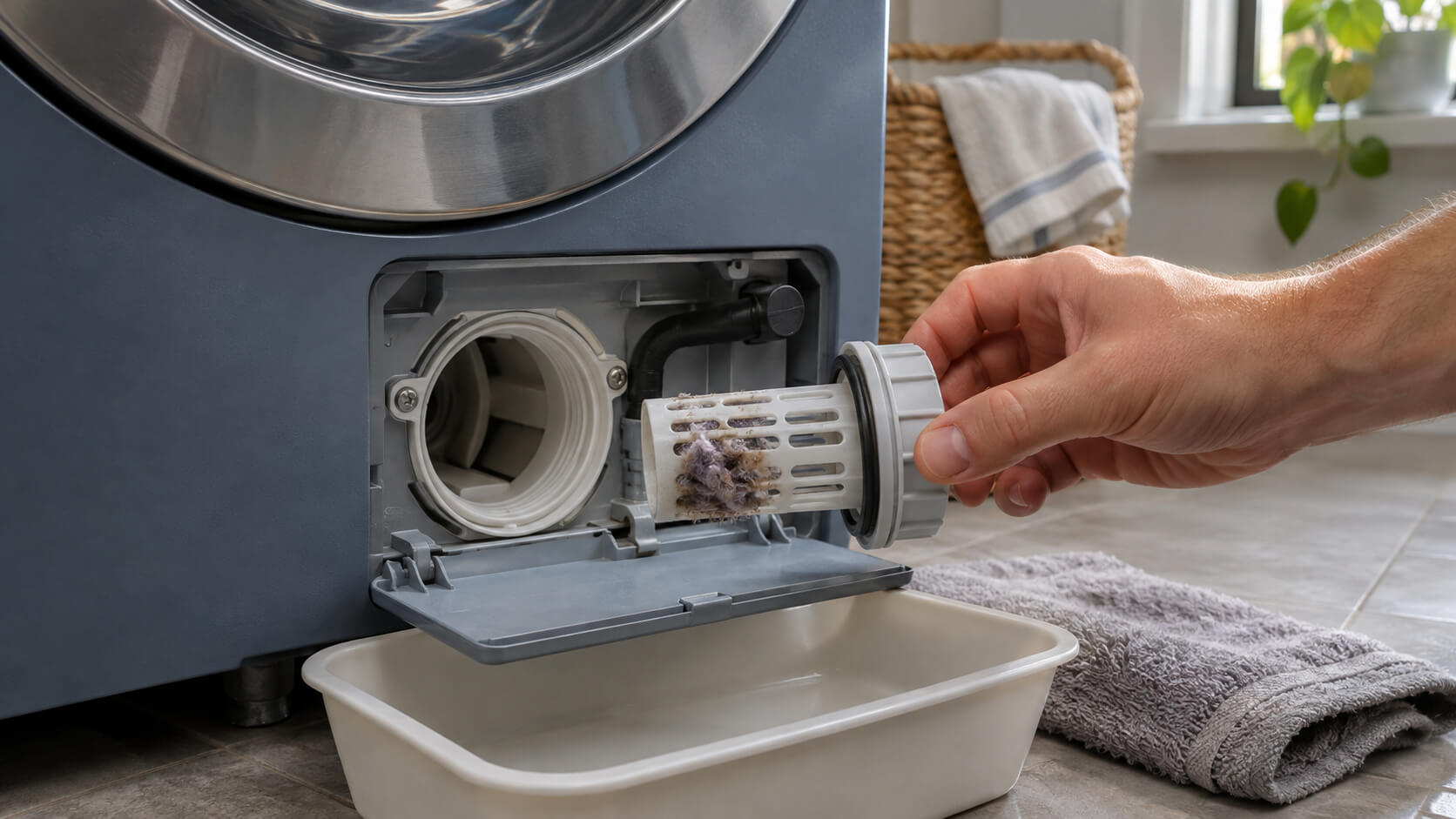
A low hum or a short gurgle during draining can be normal because the pump is moving water out of the washer. A noticeably louder buzz, rattle or grinding sound that occurs only during draining points to the drain system. Water left in the drum or a drain error makes this possibility more likely. Look for a kink in any safely accessible section of the external drain hose. On models with a user-accessible pump filter, a coin, a hairpin or a buildup of lint can restrict the flow or rattle as the pump runs. Before opening the filter, switch the washer off, disconnect it from power as directed in the manual and allow any hot water inside to cool. Follow the model’s instructions for draining the remaining water first and use a shallow container and towels to catch spills. Don’t unscrew the filter cap of a water-filled washer without following that procedure. Refit the filter and any drain-hose cap as directed before using the washer. If the filter isn’t user-accessible or the pump stays loud after the accessible checks, arrange service rather than assuming the pump needs replacement.
4. The Water Inlet Valve or Supply Pipes Are Noisy During Filling
A sound that starts before the drum moves is worth checking against the water fill stage. A brief hum at the inlet valve and the sound of water entering the washer can be normal. A persistent loud buzz while little or no water enters deserves attention. With the washer off, check that the supply taps required by your model are open and that the visible inlet hoses aren’t kinked. If the washer fills slowly or displays a water supply error, a restricted supply or a problem with the inlet valve is possible. A sharp bang from the wall just as water stops flowing suggests a different issue called water hammer. It happens when a fast-closing valve abruptly stops the flow and sends a pressure wave through the supply pipes. Note whether the bang seems to come from the plumbing or from the washer cabinet. If other fixtures make the pipes knock too, ask a plumber to check the supply rather than replacing a washer part on the strength of the noise alone. If the sound comes from the machine and filling problems persist, have the inlet valve and water supply checked before ordering parts.
5. Worn Drum Bearings or Drive Components Are Causing a Roar or Grind
A deep roar that gets louder as the drum spins faster can point to worn tub bearings. The clue is stronger if the noise occurs with many different loads and has gradually grown louder. On some front-load washers, damage to the drum support can make the inner drum wobble or rub against the door seal. If the washer is off and unplugged, the water has drained and the door opens normally, gently turn the empty drum by hand without forcing it. A rough rumble, a repeated scrape or a visible wobble is useful to report, but none of these signs proves a bearing has failed. A trapped object can also scrape and suspension movement should not be mistaken for a loose inner drum. Noise mainly during the back-and-forth wash action on a top-load machine can instead come from the agitator or its drive system, depending on the model. Note whether the sound follows drum speed or occurs only when the machine changes direction. Stop using the washer if the drum visibly sags, strikes the cabinet or grinds harshly. Bearing and drive repairs often require disassembly, so get a diagnosis and an estimate before ordering parts or deciding whether to replace the washer.
When to Stop the Washer and Call for Service?
If you find an obvious cause such as an uneven load or a loose coin, correct it before restarting. A short test is reasonable only if the original noise wasn’t severe and there are no signs of damage, burning or leaking. Stay nearby for that test and stop it if the sound returns or the cabinet begins to move. Don’t keep running the washer to reproduce a loud grind or repeated banging. If water is left in the drum, don’t force the door open. Write down whether the sound began during fill, wash, drain or spin. Describe the sound in plain terms, such as a thump, a rattle, a buzz or a roar. Include any error code and say whether the washer drained and spun normally. Note if the problem began after installation, a move or a load with a heavy item. These details can help a technician distinguish a load or installation problem from a fault inside the washer without running unnecessary test cycles.