



If your washing machine shakes or moves during the spin cycle, start by checking the laundry load, the leveling feet and the floor. A little vibration as the drum speeds up can be normal, but repeated banging or a washer that shifts across the floor is not. The timing helps narrow down the cause. If it happens only with towels, bedding or a single heavy item, the load may be unbalanced. If the washer shakes on its first cycle after installation or a move, check the setup before assuming a part has failed. A machine that rocks while switched off may not be resting firmly on all four feet. Severe shaking during ordinary loads, especially with a new grinding or knocking sound, may point to an internal fault. If the washer is already moving across the floor, stop the cycle from the controls if you can reach them safely. Don’t try to hold the cabinet still while the drum is spinning. Once the drum has stopped, use these seven causes to decide what to check next.
1. The Laundry Load Is Unbalanced
An unbalanced load gathers on one side of the drum, which can make the washer shake as it picks up speed. A single wet bath towel can cause trouble in a nearly empty drum. A fitted sheet can also trap smaller items and turn them into one heavy bundle. Overloading creates a similar problem because tightly packed clothes have too little room to redistribute before the spin cycle. Pause the washer and wait for the drum to stop and the door or lid to unlock on its own. Untangle bundled items, spread the load loosely and remove some laundry if the drum is packed. If the problem is one heavy item in an otherwise empty drum, wash it with similarly weighted items only if the care labels and the washer’s capacity allow it. For machine-washable bedding, use the appropriate bulky or bedding cycle if your model offers one. A lower spin speed can help with a suitable load that still tends to shift, but it won’t correct a loose foot or a damaged part. If the washer spins smoothly with a balanced load, you probably don’t need to replace anything.

2. The Leveling Feet Aren’t Firmly on the Floor
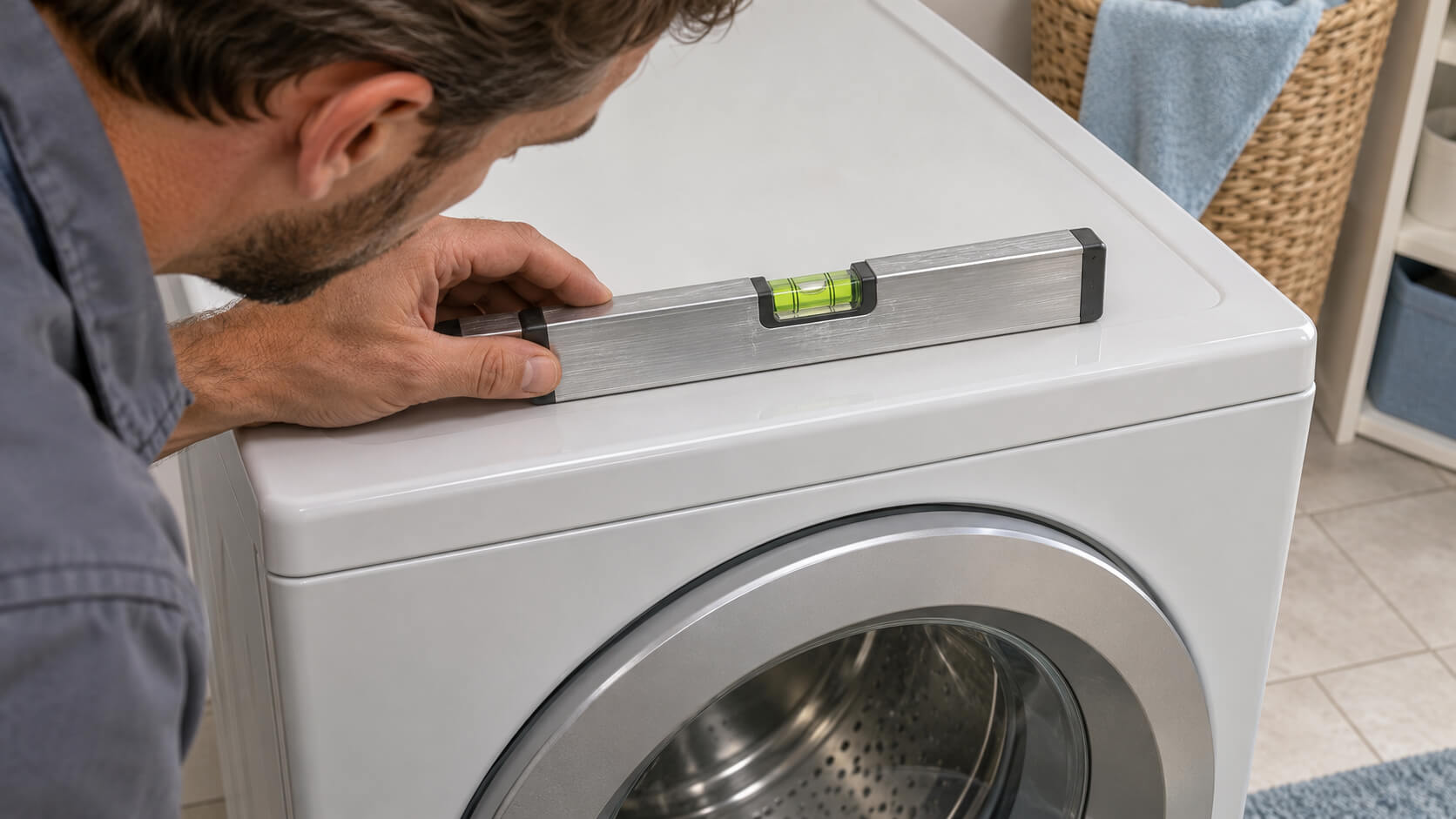
A washer can look level and still wobble if one foot barely touches the floor. With the machine off and the drum still, press down gently on opposite top corners and repeat on the other diagonal. If it rocks, check the leveling feet before running another spin cycle. Put a spirit level on the top of the cabinet and check both side to side and front to back. Adjust only the feet that need it, following the installation instructions for your model. The goal is a level cabinet with all four feet bearing weight, not simply a centered bubble. If the feet have locknuts, tighten them against the base as directed so the adjustment doesn’t shift with vibration. Look for a bent foot or a missing rubber pad, especially if the machine was recently moved. Don’t stabilize the washer by wedging cardboard or scrap wood under a corner. If you can’t reach a foot without lifting or tilting the machine, have an installer make the adjustment.
3. The Floor Flexes or the Pedestal Is Unstable
A washing machine needs a firm surface that doesn’t flex noticeably under load. Even a properly leveled washer can vibrate on a springy floor because the floor moves with it. If the room shakes during spin but the cabinet doesn’t rock when switched off, consider the floor as well as the washer. Check for loose flooring, sagging boards, thick carpet or a platform that shifts underfoot. If the washer sits on a pedestal, confirm that the pedestal is designed for that model and that its feet sit securely on the floor. A loose connection between the washer and pedestal can let the cabinet move even when the pedestal itself is level. Check that the washer has the clearances specified in the installation guide. A hose tapping against the back panel or a cabinet touching the washer can make the noise louder without being the reason the washer walks. Anti-vibration pads won’t repair a flexing floor or a loose pedestal. If the support feels unsound, ask an installer to assess it before moving the appliance or adding a platform.
4. Shipping Bolts or Packing Materials Are Still in Place
If a new front-load washer shakes violently on its first spin, check for shipping bolts before using it again. These bolts, also called transit bolts, secure the tub during transport. If they’re left in place, the tub can’t move on its suspension as intended and more vibration passes into the cabinet. The bolts are usually on the back of the washer, but their number and position vary by model. Use the installation guide to identify them rather than removing any fastener that looks similar. Check the guide for spacers or packing blocks that also need to come out. Some top-load models use a different shipping restraint or packing material, so consult their instructions even if there are no bolts on the back. The same check applies after a household move if the transport restraints were refitted. Keep any reusable bolts and spacers for the next move. If the washer has already been run with the restraints installed and still shakes after they are removed, have it inspected before putting another load through it.
5. The Shock Absorbers or Suspension Rods Are Worn
The suspension supports the outer tub and limits how far it moves as the drum spins. Many front-load washers use springs and shock absorbers, while many top-load designs use suspension rods. Worn dampers or a broken suspension component can let the tub bounce far enough to knock against the cabinet. The difference from an uneven load is that the shaking tends to recur with ordinary, evenly distributed laundry. In some top-load models, a failed rod or spring can leave the basket sitting visibly off center at rest. A little movement when you gently press on the basket isn’t enough to diagnose a fault because the suspension is designed to give. Check the feet and installation before assuming the suspension is worn. Reducing the spin speed might make the symptoms less obvious, but it won’t restore a damaged component. If the tub repeatedly bangs or the cabinet moves despite basic checks, stop using the washer. Have a technician identify which suspension parts your model uses and check them before ordering replacements.
6. A Counterweight Is Loose or Cracked
Some front-load washing machines have heavy counterweights attached to the outer tub to help keep the assembly stable. A loose mounting bolt or a cracked weight can cause a heavy knock as the tub moves, sometimes even before the drum reaches full spin speed. That symptom can sound like a failed shock absorber, so the noise alone doesn’t identify the part. A counterweight problem is more plausible if the knocking returns with different loads despite a stable installation. On models with concrete weights, gritty fragments visible on the floor can be another clue, though debris is not proof. Don’t tip the machine or reach underneath it to look for pieces. Don’t run another high-speed spin just to see if the knock gets louder. The weight and its mounting points need to be checked together because a loose fastening and a damaged mount call for different repairs. Proper tightening also depends on the specifications for the model. If you suspect a loose internal weight, leave the washer off and have it inspected.
7. The Drum Bearings or Drum Support Are Damaged
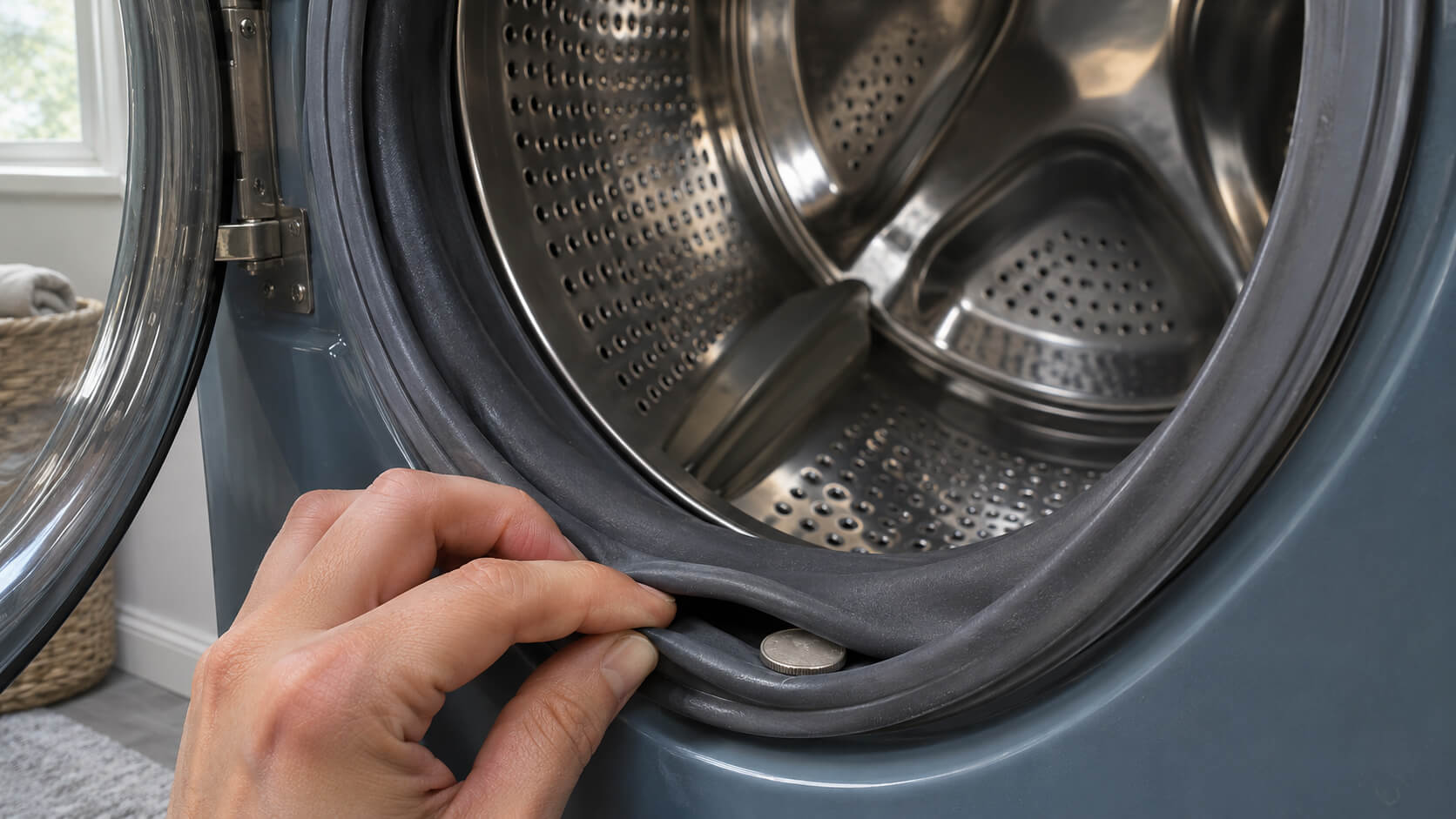
Drum bearings allow the inner drum or spin basket to rotate smoothly. A worn bearing can cause a low rumble or grinding noise that grows louder as spin speed increases. A damaged drum support can make the inner drum rotate unevenly and on some front-load washers, rub against the door seal. If the washer is switched off and unplugged and the door opens normally, gently turn the empty drum by hand without forcing it. A repeating scrape or a drum that appears to wobble as it turns is worth reporting, but neither observation confirms a bad bearing by itself. A trapped object can also scrape, while a rattle heard only as water drains points toward a different area, such as the pump or its filter. Unusual looseness of the inner drum is not the same as the normal movement of the whole suspended tub. Stop using the washer if the drum visibly rubs, sags or makes a harsh grinding sound. Bearing and drum-support repairs can involve substantial disassembly and some models require replacing a larger tub assembly. Ask for a diagnosis and an estimate before deciding whether to repair or replace the machine.
When to Stop Troubleshooting and Call for Repair?
If the washer is only mildly shaky and you find an obvious cause, correct it before trying another cycle. Use a modest, evenly distributed load that suits the selected program. Stay nearby and stop the test if the cabinet begins to shift or the tub strikes it. Don’t use a test cycle to reproduce violent movement, loud grinding, visible drum rubbing or a leak. If the shaking started with a new installation, contact the installer to check the transport restraints, floor and leveling feet. If it began gradually and now happens with ordinary loads, schedule a repair inspection. Note whether the noise starts during washing, draining or spin, and whether it gets louder as the drum speeds up. Record any error code and include the washer’s model number when you request service. Mention whether the problem occurs with every load or only with bulky items. These details help distinguish a setup problem from a worn component without running the washer through more damaging cycles.