
A washer not spinning is usually caused by an unbalanced or overloaded load, a faulty lid switch or door lock, a worn drive belt, a broken motor coupling or a drainage problem. Start by redistributing the laundry and checking that the lid closes fully. If that does not work, the issue is a failed part that needs a technician. Do not keep running a washer that will not spin, since it strains the motor and pump.
You open the washer at the end of a cycle and your clothes are soaking wet. The drum did not spin, the water may still be sitting there and now your whole laundry day is off track. It is one of the most common appliance problems homeowners face.
This guide answers all of those questions in plain language. We will walk through the most common causes, from simple things you can fix in two minutes to mechanical failures that need a trained washer technician. You will learn what to check first, what to avoid and how to get your machine spinning again fast.
Why Is My Washer Not Spinning?
A washer is not spinning most often because of an unbalanced or overloaded drum, a faulty lid switch or door lock, a worn drive belt, a broken motor coupling or a drainage problem that leaves water in the tub. Some of these have free fixes you can try right now. Others need a professional repair. The order matters here. Start with the free checks, since an unbalanced load is by far the most common cause and it costs nothing to fix. Then move on to the door and drainage checks. Only after those should you assume a part has failed. One important note before you troubleshoot. Do not keep running a washer that will not spin. Clothes stay soaked, mould can grow in the drum and repeated cycles put extra strain on the motor and pump. A minor repair can quickly become a major one.
- An Unbalanced or Overloaded Load
This is the single most common reason a washer refuses to spin and the good news is that it is not a malfunction at all. It is a safety feature. Modern washers, both top-load and front-load, have sensors that detect when the drum is lopsided. If the machine senses the load is off balance, it will pause or skip the spin cycle to prevent excessive vibration and mechanical damage. Washing a single heavy item like a duvet, a pair of jeans or a load of towels often triggers this. The fix is free. Pause the cycle, open the drum and spread the laundry evenly around it. Remove a few items if the drum is packed past the fill line. Mix heavy items with lighter ones so the weight distributes properly. Then restart the spin cycle. If the machine spins normally, you are done.
- A Faulty Lid Switch or Door Lock
If redistributing the load does not help, the lid switch or door lock is the next suspect. On some machines this accounts for roughly half of all spin failure diagnoses. On a top-load washer, the lid switch is a safety interlock. The control board will not power the motor for spin unless it gets a signal confirming the lid is closed. When the plastic actuator tab snaps off or the internal contacts wear out, the washer will fill, agitate and drain normally but refuse to spin no matter how you shut the lid. Front-load washers use a door lock instead. The lock must engage before any cycle phase begins, including spin. If it fails, the washer may not start at all or it may stop mid-cycle. A repeated clicking sound as the lock tries and fails to latch is a strong clue. A washer technician can test the switch circuit and replace the part quickly.
- A Drainage Problem
Here is something many people do not realise. If your washer will not drain, it will not spin either. The two problems are usually connected. Most washers are designed to complete draining before the spin cycle starts, so that water is not flung out of a full tub. If a clogged drain hose, a blocked pump filter or a failed drain pump stops the water from leaving, the machine simply never advances to spin. Check the drain hose behind the machine for kinks or clogs. Clean the pump filter if your model has an accessible one. Too much detergent can also create excess suds that confuse the sensors, so run a rinse cycle and use less next time. If water still will not drain, call a professional, since you are dealing with gallons of water and a possible flood.
- A Worn Drive Belt
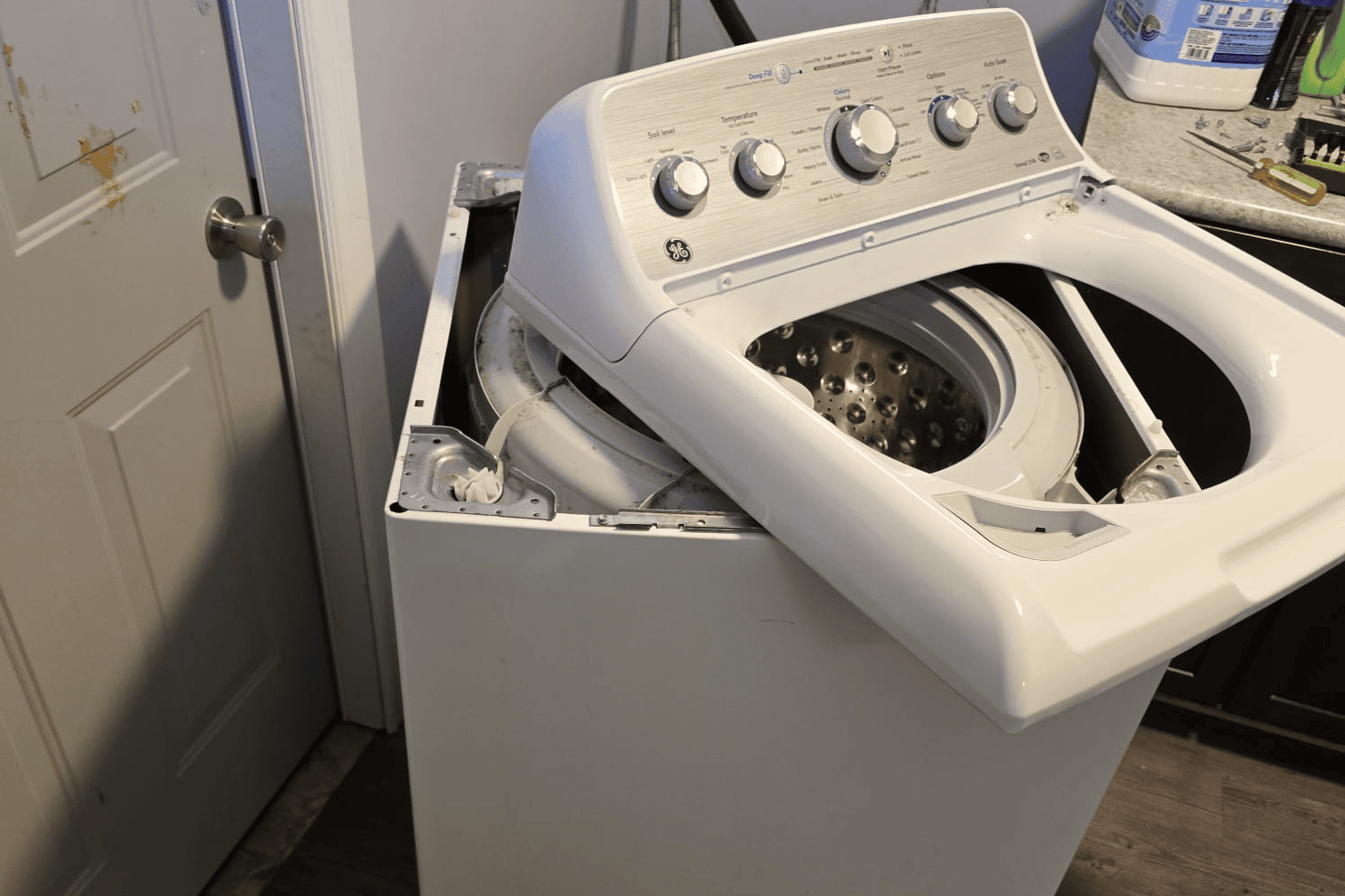
The drive belt connects the motor to the drum. When it stretches, wears thin or snaps, the motor runs but the drum barely turns or does not move at all. There are some telltale signs. You may hear the motor humming without the drum moving. A slipping belt often squeals. If the belt has slipped out of place and is rubbing against other parts, you might even notice a burning rubber smell. Belts on high-use machines typically last around five to eight years. Replacing a drive belt means removing the back panel and working around the pulleys. It is possible for a confident DIYer on some models but the belt is often awkward to reach and easy to install incorrectly. Most people are better off calling for professional clothes washer repair.
- A Broken Motor Coupling or Clutch
Some washers, especially direct-drive top-loaders, use a motor coupling instead of a belt. This is a small plastic or rubber part that sits between the motor shaft and the transmission. It is designed to wear out over time so that it protects the transmission from shock loads. When the coupling breaks, the motor runs but cannot transfer power to the basket. You may still get weak agitation, no spinning at all or a grinding noise. A worn clutch causes a similar problem in older top-loaders, leaving you with slow spin speeds and soggy clothes. Neither of these is a beginner repair. Coupling replacement usually requires tipping the washer on its side, removing the motor and swapping a multi-piece assembly. Given the weight and access involved, this job belongs to a trained technician.
- A Failed Control Board
A control board failure is less common than the mechanical causes above but it does happen, especially after a power surge. The board manages motor speed, cycle timing and the lid or door lock signals, so a fault can stop the spin cycle entirely. Before assuming the board is dead, try a hard reset. Unplug the washer for a full five to ten minutes, then plug it back in and run a spin-only cycle. This gives the board time to fully reset and some electronic faults clear on their own. If the same problem or error code returns after a reset, the underlying component likely needs attention. Modern washers display error codes that point straight to the failed part, so write down any code you see. Sharing it with your technician saves diagnostic time and money.
Repair Options and Costs
Repair costs depend entirely on which part failed. Lid switch and lid lock replacements are among the most affordable washer repair. Drive belt replacement is straightforward and moderately priced. Motor coupling and clutch work costs more because of the labour involved. Control board replacement sits at the higher end but it is still far cheaper than a new machine. Many appliance repair companies charge a diagnostic fee for the visit and apply it toward the repair if you approve the work. Ask for an upfront written estimate before anything begins. As a general rule, if the repair costs less than half the price of a comparable new washer, repair is the smarter choice. Washing machines typically last ten to fourteen years with proper care. A trustworthy technician will give you an honest assessment rather than pushing you toward replacement.
When Should You Call a Washer Technician?
Call a professional once the free checks are done. If you have redistributed the load, confirmed the lid closes fully, cleared the drain hose and tried a reset but the washer still will not spin, a part has failed. Lid locks, motor couplings, clutches, drive belts and control boards all require opening the washer cabinet. These jobs involve electrical components, heavy parts and a real risk of damage if done wrong.
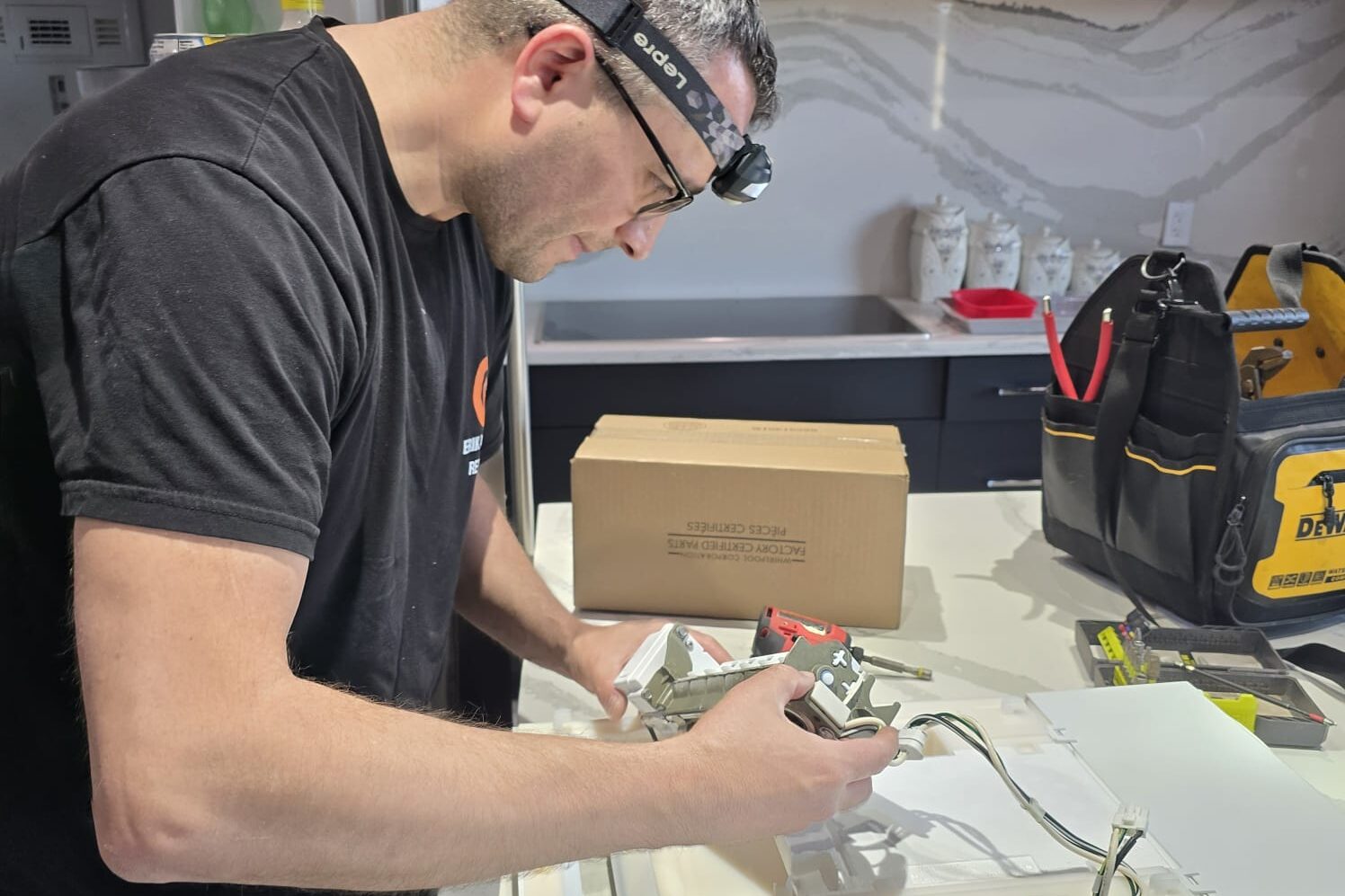
A trained technician tests the lock circuit, checks the drive system, reads stored error codes and tests the motor properly. Most washer spin repairs are completed in a single visit. Look for a company offering same-day appliance repair service, upfront pricing and a warranty on parts and labour. Fast, professional washer repair Edmonton homeowners trust protects both your laundry and your machine.
Get Your Washer Spinning Again with Erik Appliance Repairman
A washer that will not spin is frustrating but the cause is almost always a single part. Start with the free checks and if those do not work, bring in a professional before the problem gets worse. Erik Appliance Repairman is your trusted choice for washer repair Edmonton homeowners rely on. Our certified technicians handle every cause of a washer not spinning, from lid switches and drive belts to motor couplings and control boards. We offer same-day appliance repair service, upfront pricing and a warranty on every job. Do not let wet laundry pile up.
Call Erik Appliance Repairman today for fast, expert clothes washer repair and get your machine running like new again.