

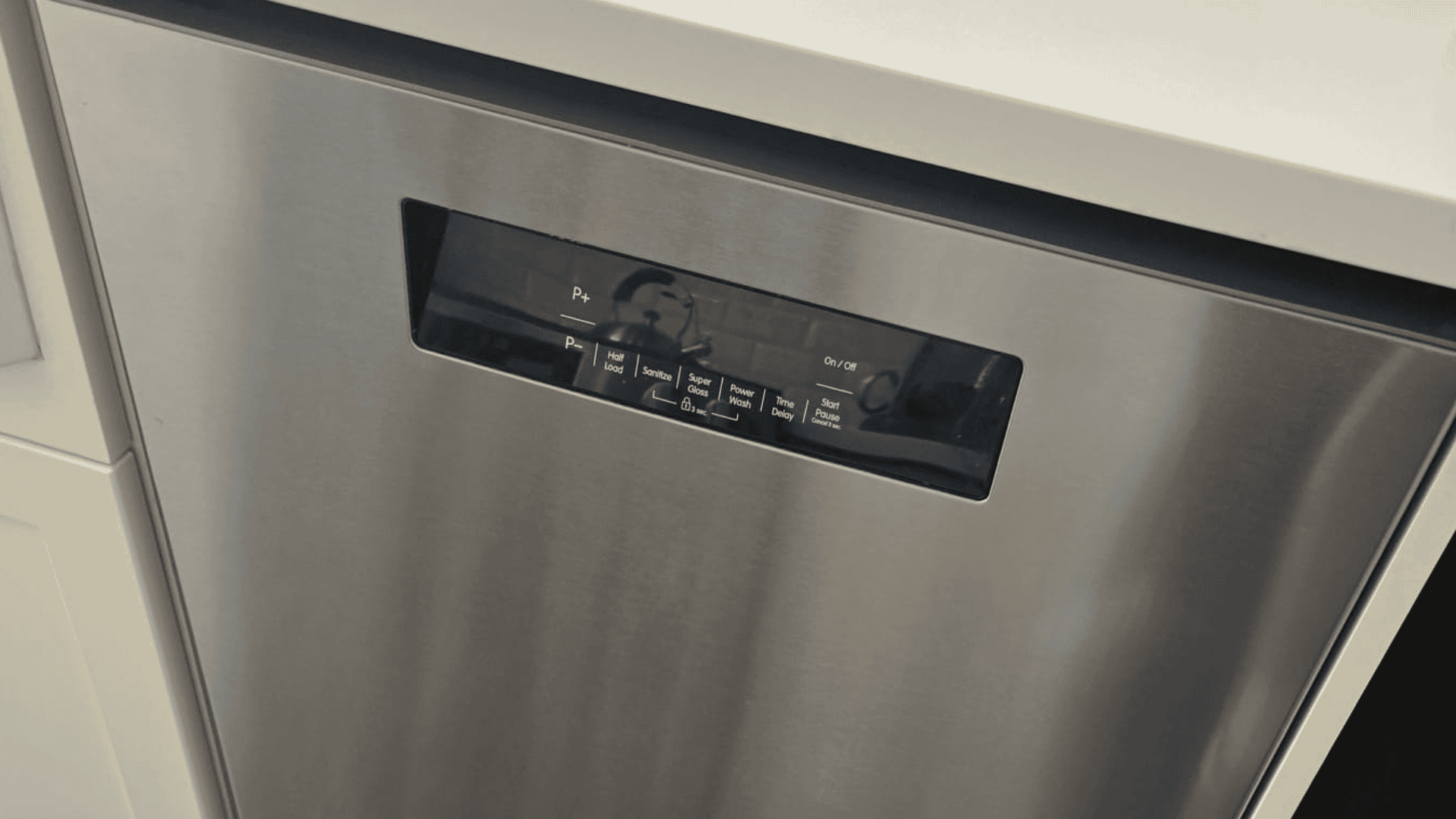
A dishwasher smells bad most often because of a dirty filter trapping decomposing food. Other causes include a clogged drain leaving standing water, mold in the door gasket, grease and soap scum buildup or hard water deposits. Clean the filter monthly, wipe the door seal and run a hot cycle with vinegar. If the smell returns quickly after cleaning, you likely have a drain or pump problem that needs an appliance technician.
Food, grease and moisture get trapped in places you never look. But the exact smell tells you a lot about the exact cause, and that is where most articles miss the point. This guide starts by decoding what your specific odor means. Then we will cover the deep cleaning steps that actually work, the habits that prevent smells from coming back and the warning signs that mean you need a dishwasher repair service rather than another bottle of vinegar.
Why Does My Dishwasher Smell Bad?
A dishwasher smells bad because food particles, grease and moisture build up inside it, usually in the filter, the drain or the door gasket. The most common cause by far is a dirty filter, where trapped food sits in warm water and decomposes. Poor drainage, mold growth, soap scum and hard water deposits are the other leading causes.
Think about what your dishwasher actually does. It sprays hot water over dirty dishes, then collects everything that washes off. Anything that does not make it down the drain stays inside, in a warm and damp environment that bacteria and mold love. The good news is that most smells have simple fixes. The bad news is that if the odor keeps coming back after a thorough cleaning, the problem is usually mechanical. Knowing which situation you are in saves you time and money.
What Your Dishwasher Odor Is Telling You
Different smells point to different problems. Use this to narrow down the cause before you start scrubbing.
A rotten egg or sulfur smell usually means trapped food particles or sulfur bacteria in the drain or filter. Hard water mineral deposits like calcium and magnesium can also give off a sulfur-like or metallic odor. Start with the filter and check the drain for clogs.
A sewage smell points to a drainage problem, often standing water sitting in the bottom of the tub. Because dishwashers frequently share a drain line with your kitchen sink, you may notice the same smell coming from the sink drain too.
A musty or earthy smell is almost always mold or mildew. Dishwashers are warm, dark and damp, which makes them ideal for fungal growth. Mold hides in the rubber door gasket, the seals and the corners.
A fishy or rotten food smell means decomposing food is sitting somewhere it should not be, typically in the filter, the spray arms or the drain components.
A new plastic, petroleum or varnish smell in a brand new dishwasher is normal. Sound-deadening material and treated motor windings both give off a scent that fades within a few weeks.
The Number One Cause: A Dirty Filter
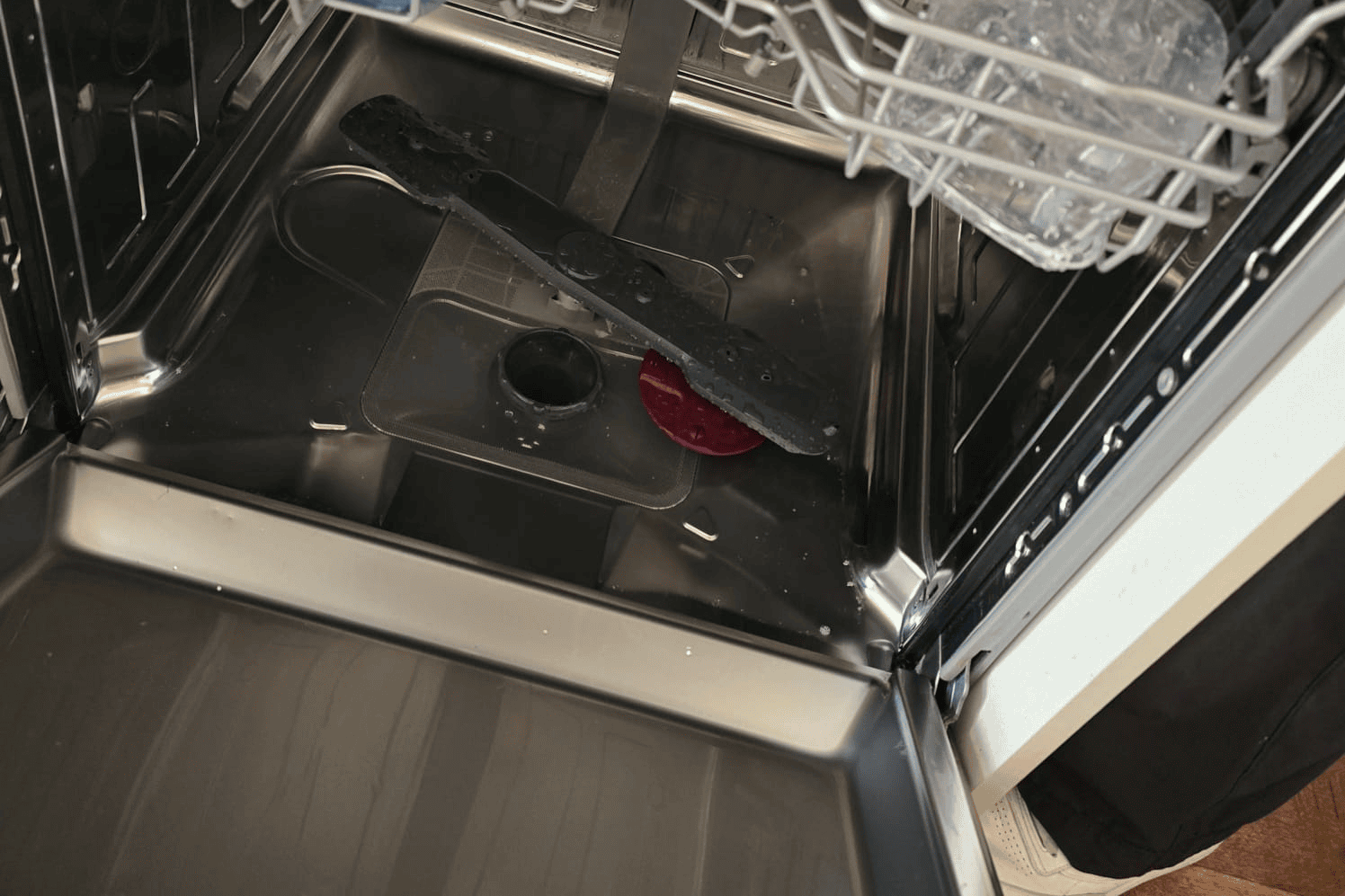
If your dishwasher smells bad, check the filter first. It sits at the bottom of the tub and catches every food particle rinsed off your dishes. Many homeowners have no idea their dishwasher even has one, so it never gets cleaned. When food sits in that filter, it decomposes in warm, damp conditions and starts to stink within days. A clogged filter also recirculates dirty water back onto your dishes, which turns an odor problem into a dishwasher cleaning problem at the same time.
Cleaning it is simple. Pull out the bottom rack, remove the filter according to your manual, then rinse it under warm running water. Scrub it gently with a soft brush and a little dish soap to break down grease. Do this once a month, or more often if you run heavy loads or have hard water. Note that some newer models have maintenance-free filters, so check your manual first.
Standing Water and a Dishwasher Drain Issue
If you open the door and find water pooled at the bottom, you have a dishwasher drain issue. That stagnant water quickly becomes a breeding ground for bacteria and mold, which produces sour and sewage-like smells that transfer straight onto your clean dishes. Common causes include a clogged drain hose, a blocked air gap, debris around the drain or a failing drain pump.
Start with what you can safely reach. Clear any food or debris around the drain area, check the garbage disposal for clogs if your dishwasher drains through it and inspect the drain hose for kinks. Drain hose clogs often hide behind cabinets and are difficult to reach safely. If you have cleared the filter and the visible drain area but water still will not leave the tub, stop there. This is a more complicated problem that should be diagnosed and repaired by a professional.
Mold, Grease and Hard Water Buildup
Even with a clean filter and good drainage, buildup can make your dishwasher smell bad. There are three usual suspects. Mold and mildew love the door gasket. That rubber seal around the door is a hot spot people almost never clean, and mold there produces a musty odor that survives every wash cycle. Wipe it monthly with a damp cloth and a little dish soap, paying attention to the crevices.
Grease and soap scum build up on the interior walls over time. Soap scum acts like a glue trap, holding food particles in place instead of letting them rinse away. Hard water adds a third layer, leaving mineral deposits that trap odors and cut cleaning efficiency. A regular descaling or cleaning cycle solves both.
How to Deep Clean a Smelly Dishwasher
Here is the routine that clears most odors in one afternoon. Start by emptying the dishwasher completely. Remove and clean the filter under warm water with a soft brush. Then check the spray arms and clear any clogged holes with a toothpick. Wipe down the door gasket, the seals and the edges around the door with a soapy cloth. Next, run a cleaning cycle. Place one to two cups of white vinegar in a dishwasher-safe container on the top rack, then run a hot cycle with no detergent and the dry option off. The vinegar neutralizes odors and dissolves buildup.
For lingering smells, sprinkle baking soda across the bottom afterward and run a short hot cycle. One important caution. Avoid harsh chemicals like bleach, which can damage internal parts and seals. Also check your manual first, since vinegar is not recommended for some stainless steel interiors. A commercial dishwasher cleaner is a safe alternative.
How to Keep the Smell From Coming Back
Prevention is easier than deep cleaning. A few habits make a real difference. Scrape food off dishes before loading them, though there is no need to pre-rinse. Clean the filter, the door seal and the spray arms about once every 30 days. Avoid overstuffing the racks so water and detergent can reach every surface. Leave the door slightly open after each cycle so moisture escapes instead of feeding mold.
Use a quality detergent and the correct amount, since too much leaves residue that smells. Finally, run your dishwasher regularly. Machines that sit unused for long stretches are far more likely to develop odors, so run a rinse cycle on a partial load if you are waiting to fill it.
When Should You Call a Dishwasher Repair Service?
Call a professional when the smell returns quickly after a thorough cleaning. That is the clearest sign that cleaning alone will not solve the problem. Persistent odors usually point to something mechanical. A failing drain pump, a clogged or improperly installed drain hose, a faulty check valve or a damaged seal can all trap water inside the machine. Cleaning the filter will never fix any of those. Standing water that will not drain, water backing up into the tub or a smell that also comes from your sink drain are all signals to stop troubleshooting.
An experienced appliance technician can inspect the pump, hoses, seals and internal components to find the real cause. Many companies offer same-day appliance repair, which matters when you are dealing with standing water that could lead to a leak or water damage. Getting it diagnosed early is almost always cheaper than waiting.
Get a Fresh, Clean Dishwasher with Erik Appliance Repairman
A dishwasher that smells bad is telling you something. Most of the time it just needs a clean filter and a good deep clean. But when the odor keeps coming back, the machine needs a professional look.
Erik Appliance Repairman is your trusted dishwasher repair service. Our certified appliance technicians diagnose every cause of dishwasher odor, from a dishwasher drain issue and clogged hoses to failing pumps and damaged seals. We offer same-day appliance repair, upfront pricing and a warranty on every job. Do not live with a smelly kitchen.
Call Erik Appliance Repairman today and get your dishwasher clean, fresh and working the way it should.