

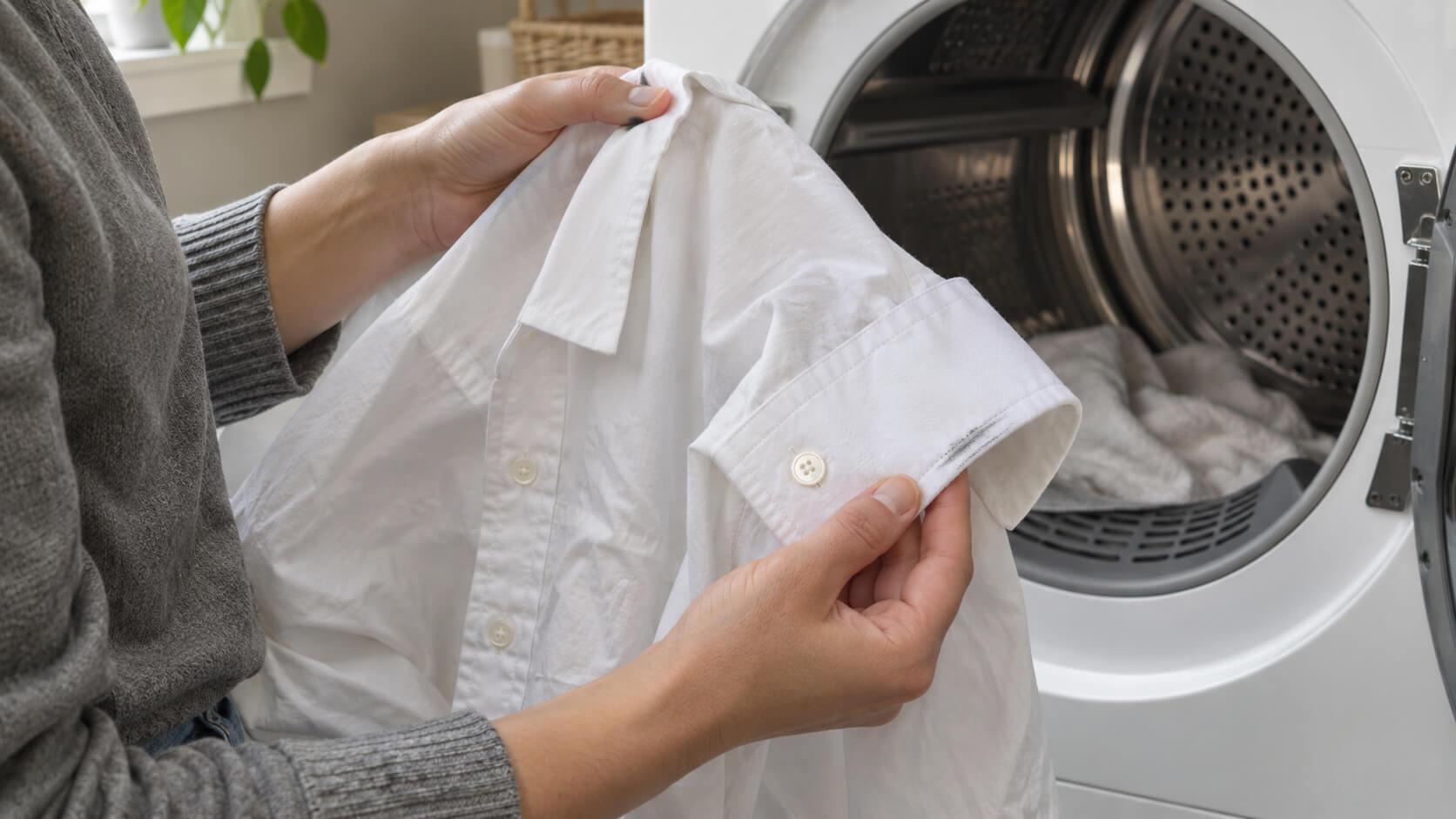
If your dryer isn’t producing enough heat, check whether the clothes stay cold throughout a heated cycle or get warm but remain damp. Those symptoms point to different problems. A dryer that tumbles without warming may be on a no-heat setting, may have lost part of its power supply or may have a fault in the heating system. When the clothes get warm but take much longer than usual to dry, start by checking airflow and load size. Clothes that feel cool at the end aren’t proof of a fault because many dryers finish with a cool-down period. A heat pump dryer also normally dries at a lower temperature than a conventional vented model. Compare the machine’s performance with how it used to dry a similar load on the same setting. If you smell burning or see smoke, don’t run another test cycle. Start with the checks that don’t require moving the appliance or opening its cabinet. The five causes below explain how to tell a drying problem from a heating failure.
1. The Cycle or Load Is Making the Dryer Seem Too Cool
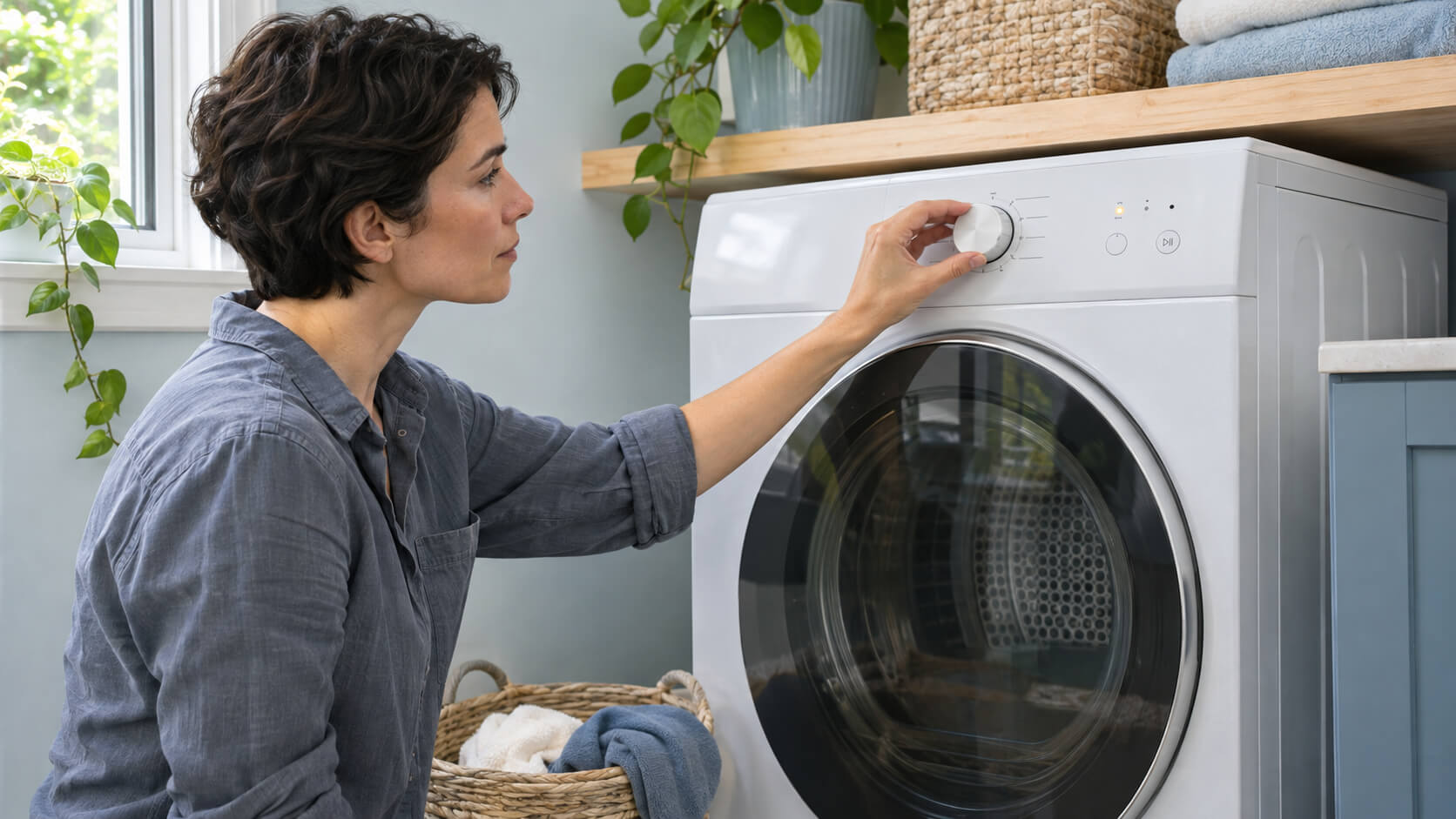
Check both the selected program and its temperature setting before assuming the dryer has lost heat. Air Only or Air Fluff tumbles the load without adding heat. A Delicates or Low Heat setting uses gentler temperatures by design. Some energy-saving programs also take longer, so compare them with the same program rather than a different cycle. Check how the dryer performs during the heated part of a cycle instead of judging it by the temperature of the clothes at the end. Use a heated setting allowed by the garments’ care labels and don’t switch to high heat simply to speed up a delicate load. An overloaded drum leaves less room for items to tumble and separate. Heavy towels can remain damp after lighter fabrics in the same load have dried. Laundry that comes out of the washer unusually wet will also take longer, even if the dryer is heating normally. If a modest load of similar fabrics dries normally on an appropriate heated cycle, a failed heater is unlikely to explain the original problem.
2. A Clogged Lint Filter or Exhaust Duct Is Restricting Airflow
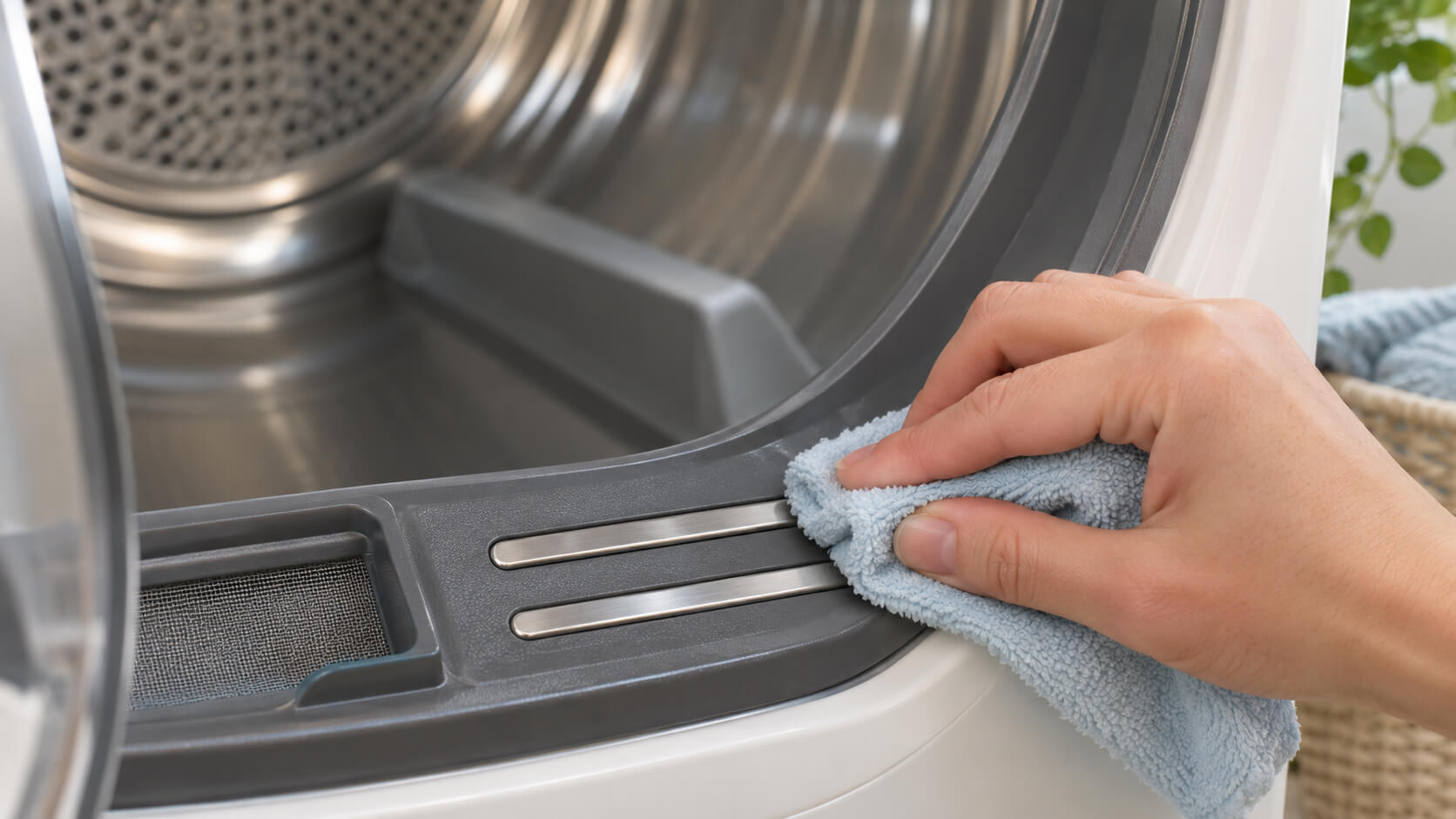
Heat alone won’t dry clothes efficiently if moist air can’t move away from the load. A clogged lint screen, a crushed exhaust duct or a blocked outdoor vent can leave clothes warm but damp and stretch out drying times. Restricted airflow can also cause overheating, prompting the dryer to cut heat. Switch the dryer off and let it cool before cleaning the lint screen, then reinstall the screen before running it. On a vented model, check the part of the duct you can see without pulling the appliance out. Look for an obvious kink or a crushed section behind the dryer. If the dryer is otherwise safe to run and the outside vent is easy to reach, observe whether the vent flap opens and air exits during a normal cycle. Weak airflow after the lint screen is clean is a reason to have the exhaust path inspected, especially if the duct is long or inaccessible. Don’t pull out a gas dryer or run a vented dryer with the duct disconnected to test it. On a ventless condenser or heat pump dryer, follow the manual for cleaning user-accessible filters and checking the condensate tank if the model uses one, rather than looking for an outside vent.
3. The Electric Dryer Has Partial Power or the Gas Dryer Has No Fuel
A turning drum doesn’t rule out a supply problem. Many full-size North American electric dryers use a 208- or 240-volt supply and some can still tumble when one side of the supply is interrupted even though the heater won’t work. This doesn’t apply to every model, so use the installation instructions to identify your dryer’s requirements. Check the labeled dryer breaker without opening the electrical panel beyond its normal access door. If a breaker has tripped and there are no signs of damage or overheating, follow the appliance instructions for a single reset rather than repeatedly resetting it. If it trips again or the problem began after a new installation, leave the dryer off and have the circuit or installation checked. A gas dryer can also tumble without heat because its motor uses electricity but its burner needs gas. If there’s no gas odor, check only what you can safely observe, such as whether a readily accessible shutoff was left closed after installation. Don’t move the dryer to reach a valve, loosen any gas fitting or reopen a supply that may have been shut off for safety. If you smell gas, leave immediately without operating switches or unplugging appliances, then call the gas emergency service or local emergency services from outside.
4. The Heating Element, Gas Burner or Heat Pump Has a Fault
If the settings, airflow and supply check out but the dryer doesn’t warm during a heated cycle, the heat source may need inspection. A conventional electric dryer uses a resistance heating element, which can stop producing heat if it fails. A gas dryer relies on a burner system rather than an electric heating element to dry clothes. Depending on the model, a failed igniter, flame sensor or gas valve coil can prevent the burner from lighting. Weak gas valve coils can sometimes allow heat at first but fail to open the valve again later in the cycle. That pattern is worth reporting, but it doesn’t prove the coils are bad because restricted airflow or temperature controls can also interrupt heat. A heat pump dryer uses a compressor and a refrigerant circuit to warm and dehumidify the air, so its diagnosis differs from that of a conventional electric dryer. Its normally lower drying temperature is not a reason to order parts if drying performance hasn’t changed. Don’t remove the cabinet, try to light a burner manually or open the refrigerant circuit. Give the technician the model number and explain whether the dryer never warms or starts warm and then loses heat.
5. Temperature Control or Moisture Sensing Isn’t Working Properly
Dryers switch the heat on and off during normal operation, so one brief period without heat isn’t proof of failure. Depending on the design, a cycling thermostat or a temperature sensor called a thermistor helps regulate the drying temperature. If the control receives an incorrect temperature reading, it can cut the heat too early or fail to heat properly. A high-limit thermostat or a thermal cutoff can also interrupt heat when temperatures become unsafe. If a one-time thermal cutoff has opened, cooling the dryer won’t reset it and the cause of overheating needs investigation before replacement. A moisture sensor does a different job: it helps an automatic cycle decide when the clothes are dry. A very small load may not brush against the sensor bars often enough, and residue on the bars can interfere with the reading. If an automatic cycle ends with damp clothes, clean the accessible sensor bars only as directed in the manual and compare with a compatible heated Timed Dry cycle if one is available. If Timed Dry heats and dries normally but the automatic cycle ends early, check the load and moisture sensing before blaming the heater. Never bypass a thermostat or thermal cutoff to keep the dryer heating.
When to Stop Troubleshooting and Arrange Dryer Repair?
Stop using the dryer if you notice a burning smell, repeated breaker trips or a cabinet that becomes unusually hot. If you see smoke, get out and call emergency services from a safe location. Don’t run another load just to reproduce an unsafe symptom. If there are no warning signs and a simple issue such as a no-heat setting or a dirty lint screen has been corrected, a normal supervised cycle can help confirm whether drying has improved. Use a load similar to the one you usually dry and choose an appropriate cycle. Note whether the clothes stayed cold throughout the heated portion, became warm but remained damp or dried normally when you changed programs. Record any error code and mention if the problem started after installation, a move or a power outage. Include the model number and say whether the dryer is electric, gas or heat pump. Problems with the house circuit or gas supply may require a qualified electrician or gas professional, while faults inside the dryer call for appliance service. Those details help identify what needs testing before any parts are replaced.