

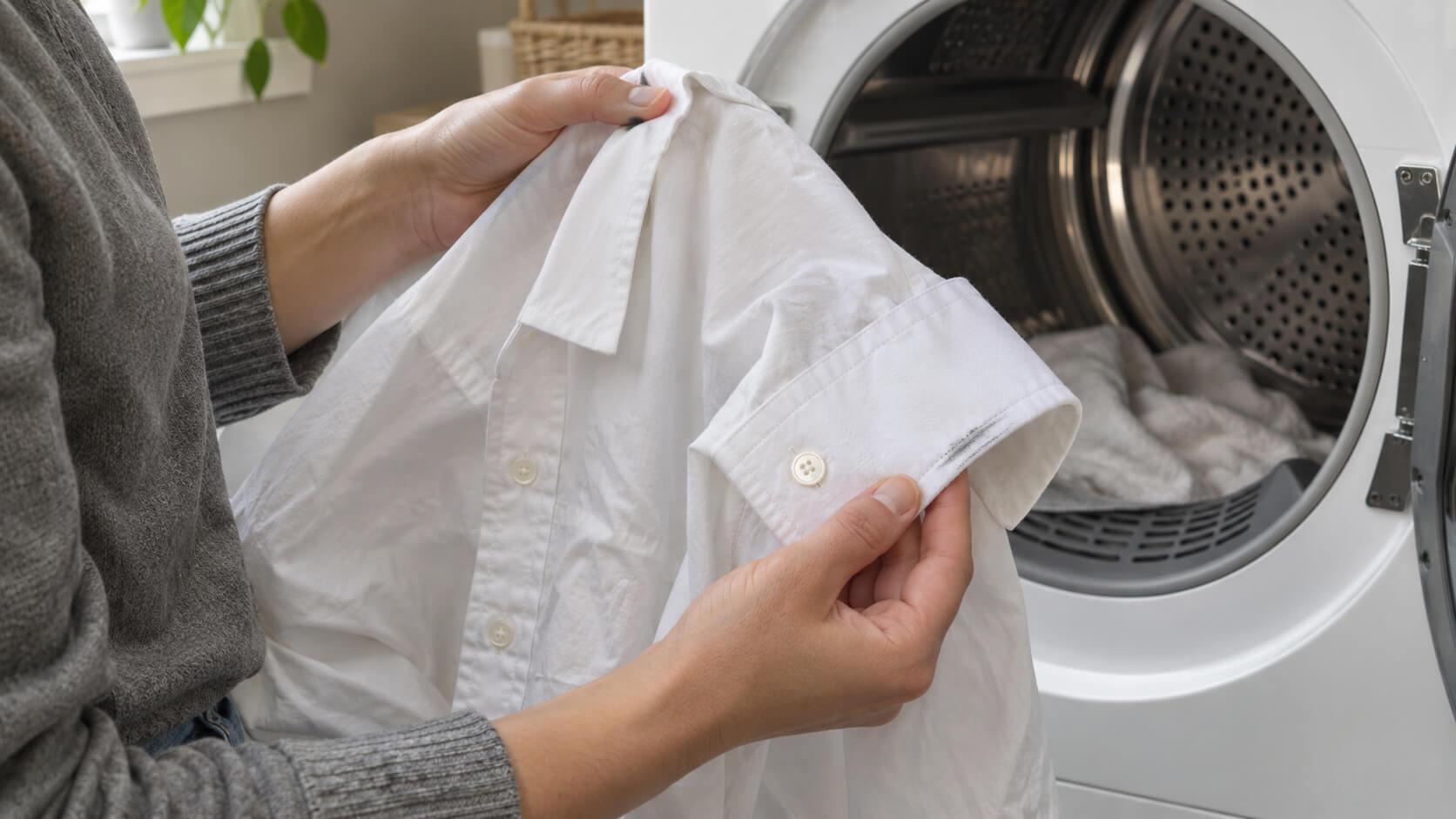
A dryer making loud noises may be reacting to something as simple as a coin in the drum or as serious as a worn part that no longer supports it properly. The quickest way to narrow down the cause is to notice what the sound is and when it occurs. A random metallic clatter during one load points you toward the clothes and pockets. A rhythmic thump that keeps coming back as the drum turns points more toward the drum supports or drive belt. A steady rattle with weaker airflow gives you a different set of clues. A low hum or a brief click can be normal and a heat pump dryer may hum as its compressor runs. Compare the sound with what is typical for your machine rather than assuming every noise means something is broken. Stop using the dryer if you hear sustained grinding or notice a burning smell, violent shaking or a drum that will not turn. If there is smoke or fire, get out and call emergency services. If you smell gas near a gas dryer, leave without operating switches and call the gas utility or emergency services from outside. Otherwise, start with the checks that do not require opening the cabinet.
1. Loose Objects or a Bunched-Up Load
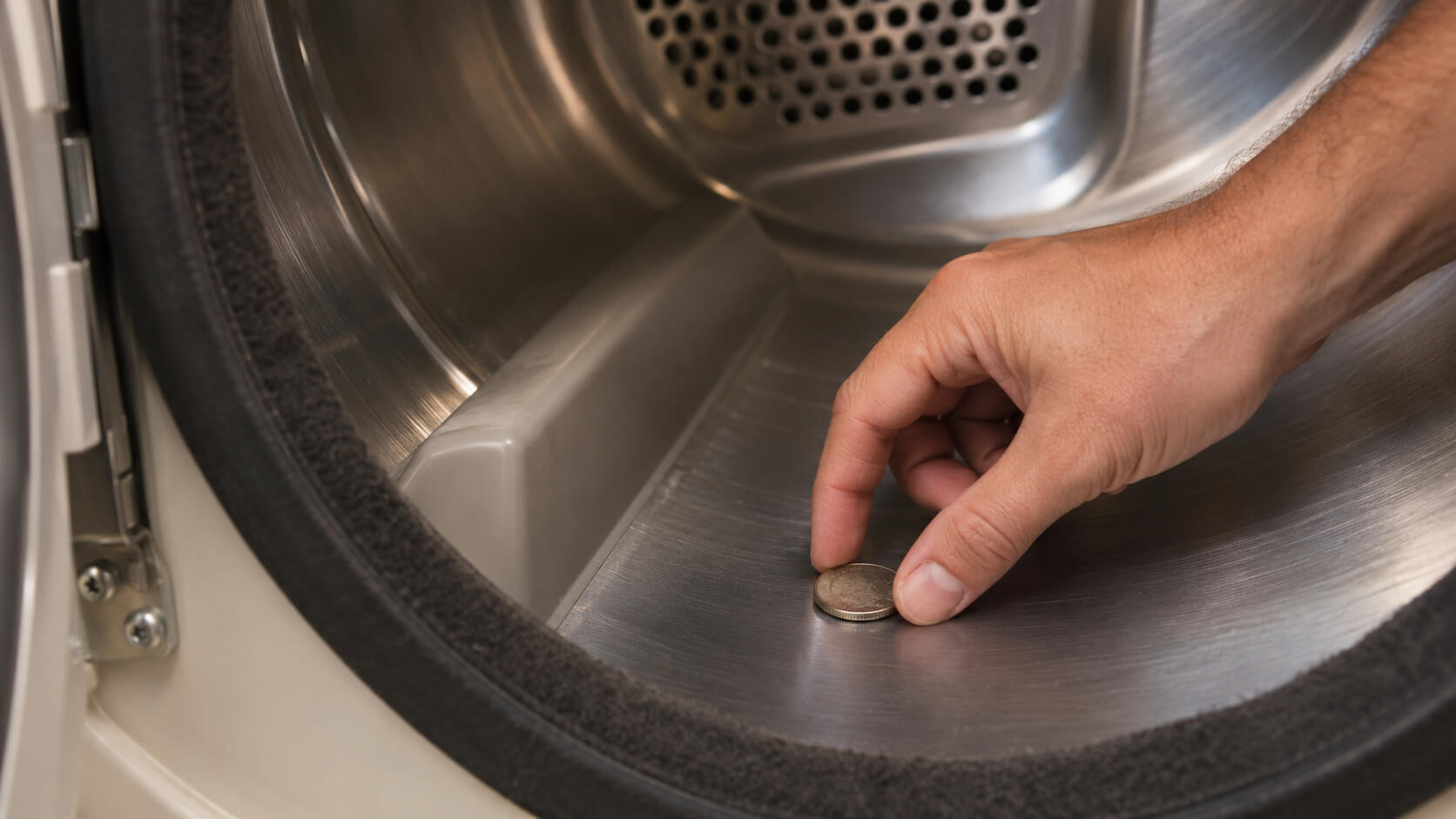
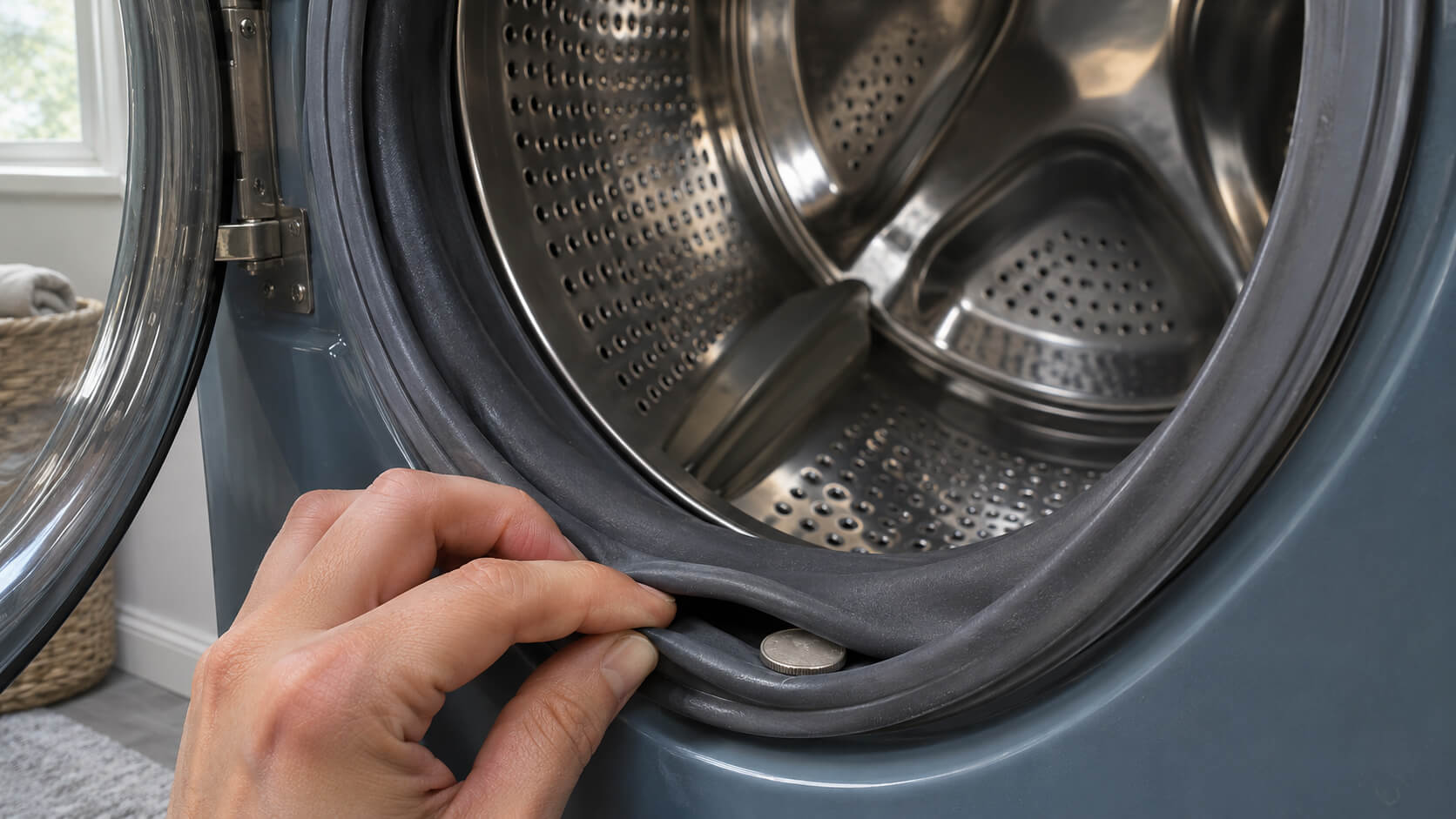
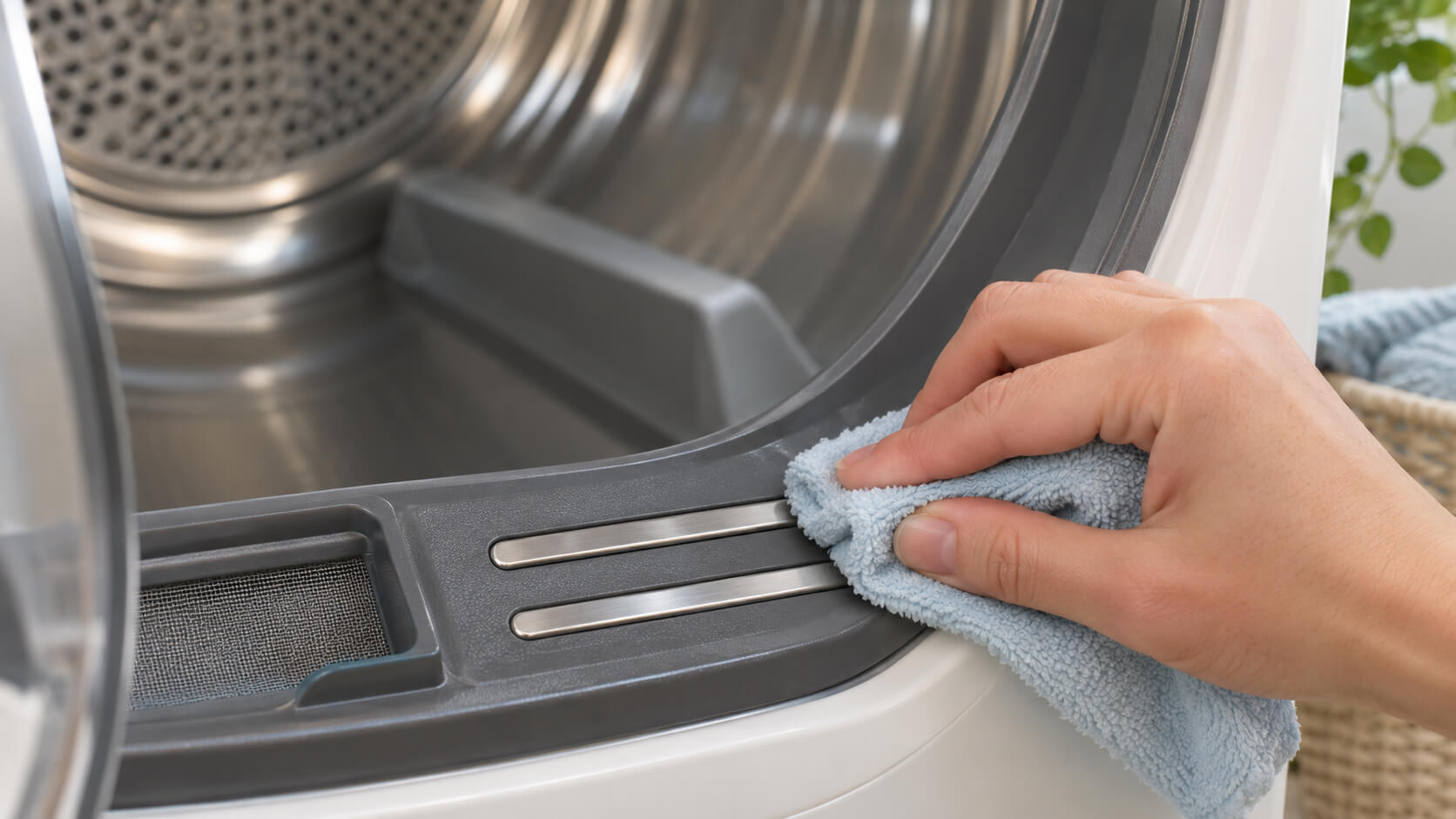
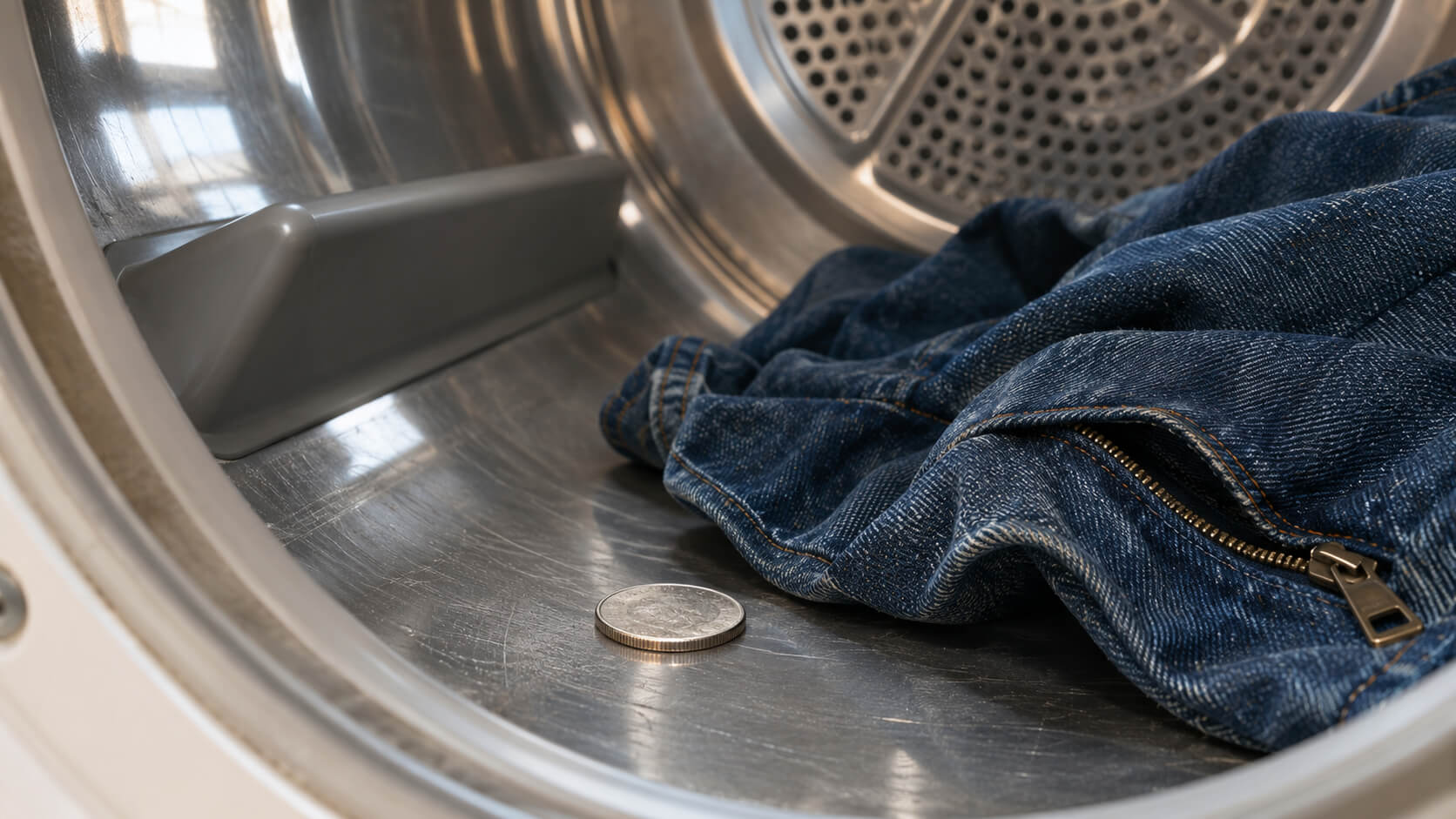
If your dryer starts rattling or banging in the middle of one load, check what is inside before suspecting a failed part. Coins, keys and loose buttons can bounce around the drum and make a surprisingly sharp metallic clatter. Zippers, buckles and oversized fasteners can make a similar sound even when nothing has fallen out of a pocket. A duvet cover or fitted sheet can trap smaller pieces of laundry and form a heavy bundle that lands with a thud on every turn. Stop the cycle, wait for the drum to come to a complete stop and remove the load. Check pockets and look along the visible drum rim and around the opening of the lint filter for loose objects. Pick up only what is easy to reach and do not push tools into the lint chute or pry at an object wedged in the rim. Untangle bulky pieces and put back only enough laundry to tumble freely. If the garment care label allows tumble drying, fasten loose hardware or turn garments with hard fasteners inside out. If the original noise was mild and there were no warning signs, a brief empty cycle can help confirm whether the sound came from the load. If the same clatter returns with the drum empty, the laundry is unlikely to be the only cause.
2. An Unlevel Dryer or Something Vibrating Against It
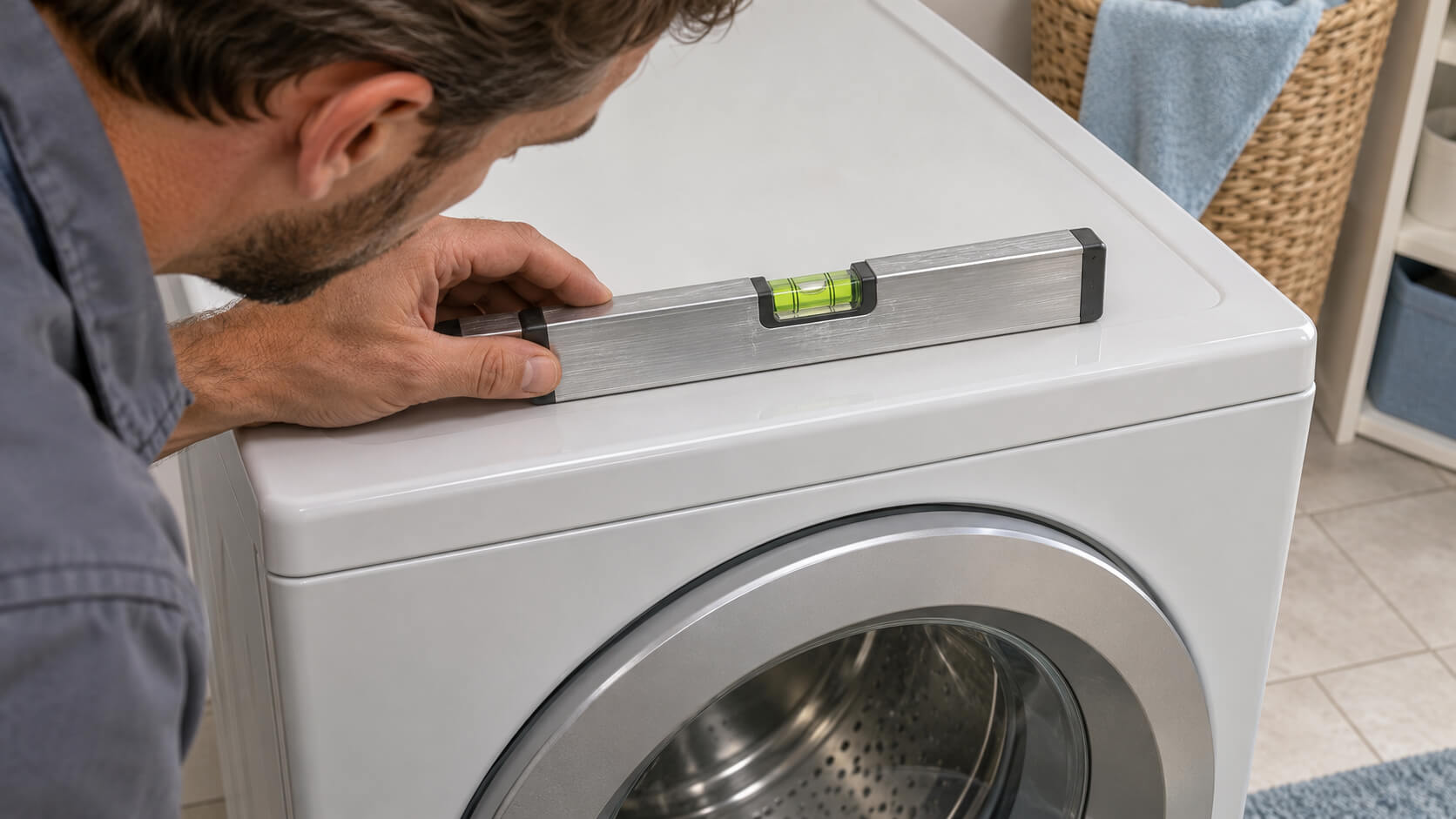
A dryer can sound much louder than usual when the cabinet rocks or touches a nearby surface. This is worth checking if the noise started after the machine was installed, moved or pushed closer to a washer. A leveling foot that does not sit firmly on the floor allows the cabinet to shift as the drum turns. Even a level dryer can buzz against a cabinet panel, a neighboring appliance or something resting on top. Switch the dryer off, clear the top and look for contact points around the cabinet. Check whether it rocks when you gently press down on opposite corners. Use a spirit level and follow the installation instructions for leveling the dryer front to back and side to side, with all feet firmly on the floor. On a vented dryer, a loose external exhaust duct may rattle against the cabinet if it is not secured or positioned correctly. Inspect only what you can see or reach safely without pulling the machine out. If the dryer is stacked, hard to access or connected to a gas line, have an installer or technician handle any repositioning. If the cabinet is steady and nothing is touching it, listen for whether the remaining noise repeats with the drum’s rotation.
3. Worn Drum Support Rollers or Roller Axles
Many dryers use small support rollers to carry the weight of the drum while it turns. A worn roller can develop an uneven tread, while a worn axle can let the roller wobble instead of spinning smoothly. Either fault can produce a rhythmic thump or a low, continuous rumble. The noise may be easier to hear under a heavier load because there is more weight on the supports. On some models, a light thump just after startup can come from temporary flat spots that formed while the dryer sat unused. That sound should fade within the first few minutes as the rollers regain their shape. A loud rumble that lasts throughout the cycle or gets worse over time is different. If you have already heard the same sound without laundry in the drum, there is less reason to suspect a bunched-up load. A damaged belt can also make a repeating thump, so the rhythm alone does not identify which part has worn out. A technician can check the roller surfaces and axles for uneven wear, side play or rough movement. If the drum is visibly wobbling or scraping, leave the dryer off until it has been inspected.
4. A Worn Drive Belt or Idler Pulley
The drive belt wraps around the drum and transfers motion from the motor. The idler pulley is the small wheel that keeps tension on that belt as the drum turns. A belt with a frayed edge or damaged section can make a recurring slap or thump as it travels around the drum and pulleys. A worn idler pulley is more likely to produce a sharp squeak, chirp or squeal while the belt is moving. Either sound may be noticeable when the dryer starts, but startup noise alone does not tell you which part is responsible. If a squeal turns into a slap or the drum stops tumbling, stop the cycle instead of trying to finish the load. Depending on the design, a broken belt may leave the drum stationary or trigger a switch that prevents the motor from running. Do not spray lubricant through the drum opening or add belt dressing to quiet the noise. The belt and pulley should be inspected together because wear in one area can affect how the other part runs. If a belt has frayed, ask the technician to check whether pulley alignment or an unevenly supported drum contributed to the wear. A new belt will not solve the underlying problem if another fault is forcing it out of alignment.
5. Worn Drum Glides or a Rear Drum Bearing
Not every dryer supports its drum in the same way. Some designs use glides, also called slides, that give the front edge of the drum a smooth surface to travel over. When a glide wears through or shifts out of place, the rim can rub against the front assembly and create a scraping sound. The noise may seem to come from just behind the door and recur in the same part of each turn. Look for new scuff marks around the visible rim, along with fabric snags or dark streaks near garment seams. A trapped item at the rim can also scrape, so check for visible debris before assuming a support part has failed. In dryers with a rear drum bearing, bearing wear can cause squealing or grinding that seems to come from deeper inside the cabinet. The sound can travel through the metal, however, so its apparent location is only a clue. The rear drum bearing supports the drum itself and is not the same as a bearing inside the drive motor. A technician can identify the support system fitted to the model and check where the drum is making contact. Stop using the dryer if the scrape is persistent or the machine starts catching and damaging fabric.
6. A Loose, Damaged or Blocked Blower Wheel
The blower wheel is the fan that moves air through the dryer. The airflow path varies between vented and ventless models, but a loose or damaged fan can make either type unusually noisy. On some machines, a small object that enters the lint chute can strike or obstruct the wheel, causing a fast rattle or knock. A wheel that is loose on its shaft or out of balance can create a steadier rumble. Compared with a thump that follows the drum, blower noise can sound faster or almost continuous. If the noise appears alongside longer drying times or weaker exhaust airflow on a vented model, check the airflow path as well as the fan. Switch the dryer off and clean the removable lint filter as directed in the manual. Look for visible debris at the filter opening without reaching into the chute and do not run the dryer without its filter in place. A blocked exhaust duct can also weaken airflow, so poor drying by itself does not prove the blower wheel is at fault. If cleaning the filter does not address the problem, arrange an inspection of the blower housing and the relevant ducts or filters. Persistent noise paired with poor drying warrants a check rather than another long drying cycle.
7. A Failing Drive Motor or Motor Bearings
The drive motor turns the drum through the belt and also drives the blower on many dryers. Worn motor bearings can produce a growl, whine or grinding noise while the motor runs. A different warning sign is a loud buzz when you press Start but the drum does not move. That can indicate a stalled motor, but a jammed blower or binding drum can also keep a healthy motor from starting. If the dryer runs briefly, shuts itself off and will only restart after cooling, tell the technician about that pattern. It can be consistent with a motor overheating under load, although the shutdown does not prove the motor is defective. Do not keep pressing Start or try to help the drum turn by hand while the dryer is powered. If the noise is severe, keep the machine off and skip the empty-cycle test. A technician can check whether the drum and blower turn freely and then assess the motor and its starting circuit. Before the visit, note whether the sound starts immediately, builds as the dryer warms up or occurs only with laundry inside. Those details can help distinguish a motor under strain from a failing motor and prevent the wrong part from being replaced.