
If your dishwasher door won’t latch, first check whether it stops before reaching the frame, reaches the frame but springs back or stays shut while the machine refuses to start. Those symptoms point to different problems. A door that stops short may be hitting a dish, a rack or the surrounding cabinetry. A door that reaches the frame but won’t stay shut may have a problem with the latch, the strike or their alignment. If the door stays closed but the dishwasher still reports it as open, the door switch or its circuit may need attention. The timing matters, too. A problem that starts after installation calls for different checks from one that happens only with a full load. If the door opens by itself at the end of a cycle, an automatic drying feature could explain it. Start with an empty dishwasher and a gentle closing motion. Don’t slam the door or run the machine if it won’t stay securely latched.
1. A Dish or Rack Is Blocking the Door
Empty both racks and the cutlery tray, if your dishwasher has one. Slide each rack all the way in before trying to close the door. If the door latches when the dishwasher is empty, reload one rack at a time to find what was in the way. Check for pan handles, cutting boards and large plates extending past the front of a rack. Look for spoons or other utensils that have slipped between the door and the tub. Check underneath the lower rack for anything hanging through the wire openings and catching as the rack rolls inward. If the upper rack is height-adjustable, confirm that both sides are set to the same level. An uneven rack can stop short even when it’s empty. If an empty rack still won’t slide in, check that its rollers are seated on their tracks and look for anything obstructing the rails. If both racks slide in fully but the door still won’t latch, move on to the door gasket.
2. The Door Gasket Is Dirty, Displaced or Damaged
The dishwasher door gasket is the flexible seal that helps keep wash water inside the tub. A utensil or a piece of hardened food caught against the gasket can keep the door from closing fully. A section of the seal that has lifted out of its channel can also get in the way. Check the top and sides of the opening, particularly the corners where the seal bends. Wipe the gasket and the surface it presses against with a soft, damp cloth. Avoid scraping the seal with a sharp tool. Look for a rolled edge, a visible tear or a section that sits higher than the surrounding material. A worn or torn seal can leak even when the latch catches, so water at the door doesn’t automatically mean the latch is broken. A new gasket can feel firmer at first, but it should still allow the door to close without being forced. If the problem started right after a gasket replacement, check the model instructions to confirm that the seal is seated correctly and that the replacement fits your dishwasher.
3. The Dishwasher Is Out of Level or Rubbing Against the Cabinet
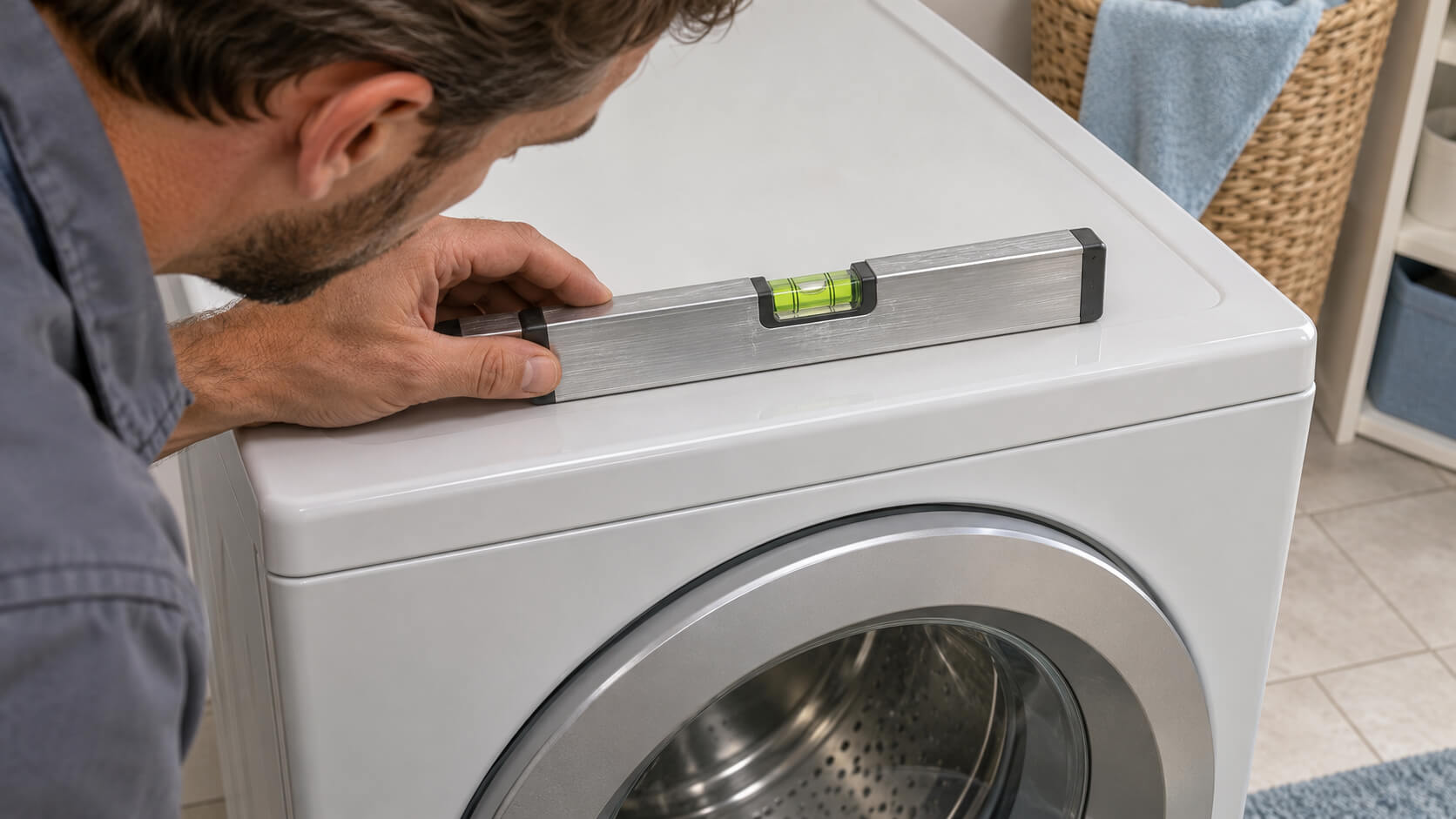
If the door hasn’t closed properly since installation or a kitchen renovation, check how the dishwasher sits in the cabinet. With the racks pushed in, close the door slowly and watch the gaps at the top and along both sides. Look for a corner that catches on the cabinet before the latch reaches the strike. On a built-in dishwasher, an exposed mounting screw beneath the countertop can also block the top of the door. An uneven gap is a useful clue, but it doesn’t prove that the hinges are damaged. The dishwasher needs to sit level and the tub opening needs to be square so the door can meet the frame evenly. If the tub is out of square, one side may make contact before the other. If the entire dishwasher shifts forward when you open the door, stop using it and have the mounting checked. Don’t try to compensate for poor alignment by moving or bending the latch strike. Ask the installer to check the leveling feet, mounting brackets and cabinet clearances against the installation instructions.
4. A Hinge or Spring Is Affecting How the Door Moves
Pay attention to how the door moves before it reaches the latch. If one corner sits lower than the other, the door scrapes as it swings or it needs to be lifted to close, check for hinge or alignment problems. One side may no longer be seated correctly on its hinge. A door that suddenly drops open suggests a different issue with the mechanism that balances its weight. Depending on the model, that mechanism may use springs and cables. A door that closes straight but feels unusually heavy is a better reason to check the counterbalance than to order a new latch. Compare the two sides visually without putting your fingers near the hinges. Don’t use the open door as a shelf or keep lifting a sagging door to make it close. If the problem appeared after a decorative panel was fitted, ask the installer whether the door tension was set for that panel. Leave hinge, cable and spring repairs to a technician, since parts of the assembly can be under tension.
5. The Door Latch or Strike Isn’t Engaging
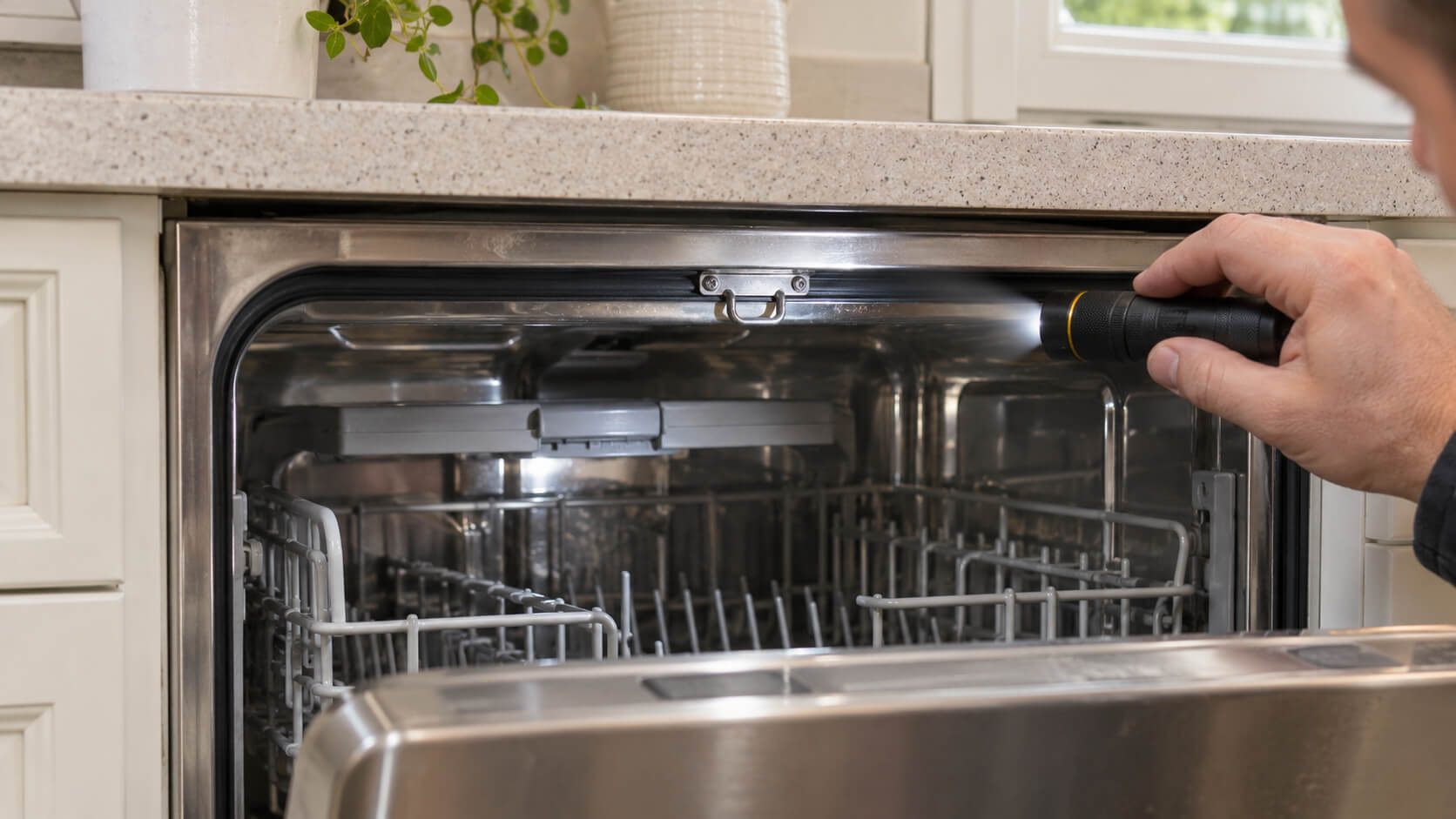
The latch holds the dishwasher door closed by catching the strike, the matching tab or loop on the opposite side of the opening. Inspect the visible parts with the door open and the dishwasher switched off. Look for a cracked latch housing, a visibly loose strike or broken plastic around the opening. Close the door gently and notice whether it reaches its usual position but bounces back as soon as you let go. If the racks are clear and the door meets the frame evenly, that symptom makes the latch and strike worth checking. It doesn’t tell you which part needs replacement, because a misaligned strike can behave like a broken latch. On models that normally close with an audible click, a change in that sound can offer another clue. Don’t pry at the latch with a screwdriver, bend the strike or use tape to hold the door closed. If the latch or strike is visibly damaged, have the matching parts inspected together. Use the full model number to confirm compatibility before ordering a replacement.
6. The Door Closes, but the Dishwasher Still Won’t Start
A dishwasher door can latch mechanically without the control detecting that it’s closed. A faulty door switch, sometimes built into the latch assembly, can cause that mismatch. Typical clues include a door-open warning or a cycle that won’t begin even though the door stays shut. Beeping or a flashing Start light alone doesn’t prove that the switch is bad. First check whether a delay is set, the controls are locked, or a previous cycle needs to be resumed. The order matters on some models: you may need to select a cycle, press Start, and close the door within the time shown in the manual. If a warning clears only while you press on the door, the latch may not be engaging far enough to activate the switch reliably. Don’t keep pressure on the door to run a cycle. If the warning persists after you follow the correct start sequence, a technician can check the latch alignment, the switch, and its wiring. Never bypass the door interlock to test whether the dishwasher will run.
7. The Automatic Drying Feature Is Holding the Door Open
Some dishwashers open the door slightly at the end of a cycle to let moisture escape. If the door is ajar only after drying and closes normally later, this behavior may be intentional. On certain models, a small actuator or push rod stays extended briefly after opening the door. Trying to shut the door during that period can feel as if it’s hitting a solid stop. If you see a protruding rod, don’t force the door against it or push the rod in by hand. Check your manual for the drying feature and the correct closing procedure. The timing and reset instructions vary by model, so avoid applying a procedure meant for a different dishwasher. If the feature can be turned off, the manual will explain how to change the setting. A mechanism that remains extended beyond the expected time may need service. If the door also refuses to latch before a cycle or when the drying feature hasn’t run, check for an obstruction or a latch problem instead.
8. When to Stop Troubleshooting and Schedule a Repair?
Leave the dishwasher off if the door won’t stay latched, leaks at the front or opens unexpectedly during a wash cycle. Hot water can splash out if the door opens while the dishwasher is spraying. If removing an obstruction or cleaning the seal fixes the closing problem, make sure the door moves smoothly and holds shut without extra pressure. Only try a cycle once the door latches normally and there’s no sign of damage or an unresolved leak. Stay nearby when you run the first cycle and stop it if water appears around the door. If the door hangs crooked, drops open or shows visible latch damage, don’t run a cycle just to confirm the fault. For a problem that started right after installation, contact the installer about the mount and alignment. For a door that shuts securely but still shows a door-open warning, ask a technician to check the latch and switch circuit. Write down whether the fault happens with both racks empty, whether the door catches and releases and whether any warning appears. That information helps narrow down the cause before anyone replaces parts.