
A dishwasher not cleaning dishes is usually caused by a clogged filter, blocked spray arms, water that isn’t hot enough, improper loading, or the wrong detergent. Most of these are easy fixes you can do in minutes. If you still get dirty dishes after a cycle once those are ruled out, the problem may be the wash pump, motor, or another part that needs a dishwasher technician.
Most of the time, the cause is simple and the fix is easy. This guide explains the key reasons your dishwasher is not cleaning, what you can safely check yourself, and when it’s time to call a professional. We’ll walk through clogged filters, blocked spray arms, water temperature, loading mistakes, detergent issues, and more, all in plain and simple language. By the end, you’ll know how to get your dishes sparkling again and when a dishwasher repair service is the smarter choice. Let’s start with the most common causes.
Table of Contents
Why Is My Dishwasher Not Cleaning Dishes?
A dishwasher is not cleaning dishes most often because of a clogged filter, blocked spray arms, water that isn’t hot enough, improper loading, or detergent problems. Many of these are simple homeowner fixes, while a few point to a part that needs repair. Modern dishwashers reuse the same water during a cycle and rely on the filter to trap food. So when something gets clogged or blocked, dirty water gets recirculated right back onto your dishes.
That’s why a small issue can leave a big mess. The smart approach is to work from the simplest causes to the deeper ones. Start with the filter, spray arms, and water temperature, then check your loading and detergent. If dishes are still dirty after a cycle, the problem may be mechanical.
A Clogged Filter Is the Most Common Cause
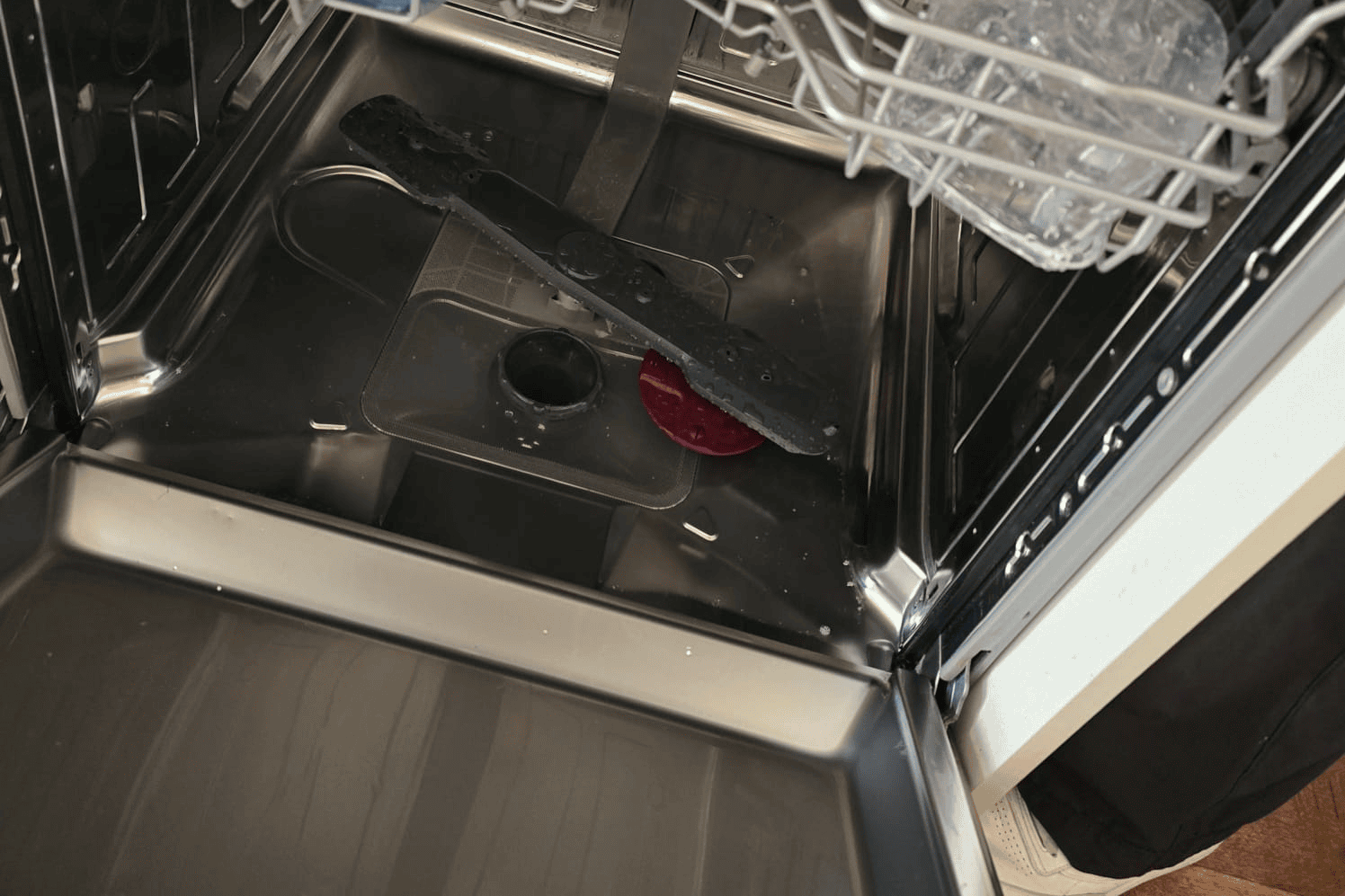
A dirty or clogged filter is one of the top reasons for a dishwasher not cleaning properly. The filter, found on the bottom floor of the machine, traps food particles during the wash. When it fills with debris, the dishwasher recirculates dirty water and leaves grit and film on your dishes.
The fix is simple. Pull out the lower rack, remove the filter (in many models it twists out with a quarter turn), and rinse it under warm running water. For heavy buildup, soak it in warm soapy water and gently scrub with a soft brush. Make this a habit. Cleaning the filter once a month keeps your dishwasher running well. If you run heavy loads often, weekly is even better. This one small task prevents many cleaning problems.
Blocked or Clogged Spray Arms
The spray arms are the spinning parts that shoot water through tiny holes to clean your dishes. Over time, those holes get clogged with food bits or hard water minerals. When that happens, water pressure drops and your dishes don’t get clean, especially on the top rack.
To check them, remove the spray arms following your model’s instructions. Hold each arm up to the light to spot clogged holes, then use a toothpick or thin wire to clear them. Rinse the arms under warm water and reattach them. Also make sure nothing blocks the arms from spinning. Tall dishes, utensils, or cutting boards can stop the rotation. After loading, spin the arms by hand to confirm they move freely.
Water That Isn’t Hot Enough
Dishwashers need hot water to work, usually at least 120 degrees Fahrenheit. If the water is too cool, the detergent won’t dissolve properly and grease won’t wash away. This is a common reason for dirty dishes after a cycle even when everything else looks fine.
A quick trick is to run your kitchen sink on hot for about a minute before starting the dishwasher. This sends hot water to the machine right from the start of the cycle. If the water never gets hot, you may have a water heater issue rather than a dishwasher problem. Be careful not to set your water heater too high, though. Water above 140 degrees can cause scalding, especially with young children at home. Around 120 degrees is usually the safe and effective sweet spot.
Loading Mistakes That Block the Water
How you load the dishwasher matters more than most people think. Dishwashers are sprayers, not soakers. If dishes overlap, stack too closely, or block the spray arms, water can’t reach every surface and some dishes come out dirty.
Load dishes with the soiled side facing down and inward toward the spray arms. Leave gaps between items so water flows freely. Keep the center area clear so the spray arm can reach all the racks. Also make sure no large item blocks the detergent dispenser door. Proper loading is often the easy fix people overlook. A few small changes in how you stack your dishes can make a big difference in how clean they come out.
Detergent and Rinse Aid Problems
Using the wrong detergent, or too much or too little, can leave residue and film on your dishes. Always use automatic dishwasher detergent only. Regular dish soap creates too many suds and can overflow the machine.
Quality pods and tablets usually clean better than powder or gel and reduce filming. If you use powder, start with about one tablespoon and store it in a cool, dry place so it doesn’t clump. Old or moist detergent loses its cleaning power. Rinse aid also helps a lot, especially with hard water, which is common in many Edmonton homes. It reduces spotting and mineral buildup and improves drying. Also make sure pods go in the dispenser, not the bottom of the machine, or they may wash away before the main cycle.
Hard Water, Buildup, and the Wrong Cycle
Hard water can leave white film and mineral buildup on dishes, glassware, and even the spray arms, slowly cutting cleaning power. Running a monthly cleaning cycle with vinegar or a dishwasher cleaner helps dissolve this buildup and keep things working well. Choosing the wrong cycle can also make a good dishwasher seem broken.
Quick and Eco cycles are great for lightly soiled dishes but often struggle with baked-on food. For dirty loads, use the Normal or Heavy cycle and add a high-temperature option when needed. Cleaning the inside of your dishwasher every 30 days prevents grease, soap scum, and minerals from building up. A clean machine simply cleans better, and it lasts longer too.
When Should You Call a Dishwasher Technician?
You should call a professional when you’ve cleaned the filter and spray arms, fixed your loading, confirmed hot water, and used the right detergent, but your dishes are still dirty after a cycle. At that point, the issue is likely mechanical.
Weak water circulation is a classic sign of a deeper problem, especially if the top rack stays dirty or the spray sounds weak. Grinding or unusual noises also point to the wash pump or motor. Standing water in the bottom can mean a drain pump issue or a clog. A trained dishwasher technician can quickly diagnose whether the problem is with the dishwasher draining, heating, or circulation system, then repair the part that’s actually responsible. A professional diagnosis is usually faster and cheaper than guessing and replacing parts yourself.
Get Spotless Dishes Again with Erik Appliance Repairman
A dishwasher not cleaning your dishes is frustrating, but most issues have simple fixes. When the easy steps don’t solve it, a professional can find the real cause fast and save you time and money. Erik Appliance Repairman is your trusted dishwasher repair service in Edmonton.
Our skilled technicians diagnose every cause of dirty dishes after a cycle, from clogged filters and spray arms to pump and motor problems. We offer honest pricing, fast appointments, and reliable appliance repair in Edmonton you can count on. Don’t keep rewashing dishes by hand. Call Erik Appliance Repairman today and get your dishwasher cleaning like new again.